
Sustaining Physical Independence: Improve Mobility, Balance & Strength
Maintaining the ability to move freely, balance confidently, and perform daily activities without assistance is something most people take for granted—until pain, weakness, or neurological conditions begin to interfere.
At Varia Physiotherapy Clinic in Ahmedabad, many patients between the ages of 30 and 65 come to us with a common concern:
“I’m scared I’ll lose my independence if this gets worse.”
This fear is real.
Whether it’s difficulty climbing stairs due to knee pain, losing balance after a stroke, or struggling with back pain that makes walking uncomfortable, physical limitations can affect confidence, work, family life, and emotional health.
This is why Sustaining Physical Independence: Improve Mobility, Balance & Strength is not just about exercise—it is about preserving quality of life.
Physiotherapy plays a crucial role in helping people maintain and regain independence safely and effectively.
Why Physical Independence Matters More Than You Think
Physical independence means being able to:
- Walk without significant pain
- Get up from bed or a chair easily
- Maintain balance while standing
- Carry groceries
- Use stairs safely
- Perform self-care like bathing and dressing
According to the World Health Organization (WHO), reduced mobility is one of the leading contributors to long-term disability worldwide.
It may begin with:
- Mild stiffness
- Frequent falls
- Muscle weakness
- Joint instability
- Poor posture
- Reduced coordination
Ignoring these early signs can make recovery more difficult later.
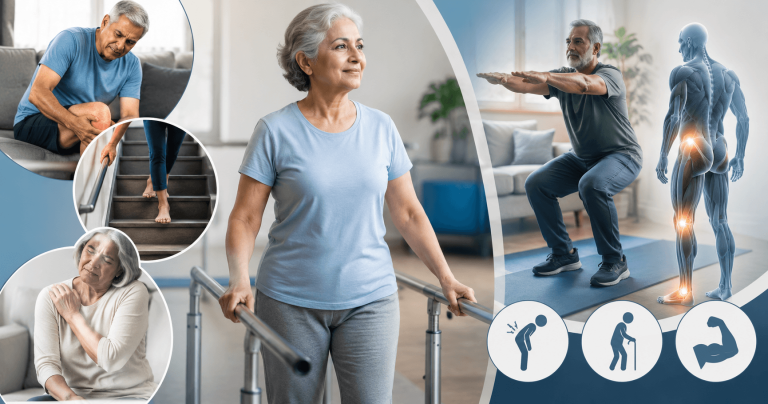
Common Conditions That Affect Mobility, Balance, and Strength
At Varia Physiotherapy Clinic, we commonly treat patients experiencing:
1. Osteoarthritis
Living with osteoarthritis often means everyday movements like walking, climbing stairs, or standing up become painful and tiring. Over time, joint stiffness and swelling can reduce confidence in movement. Physiotherapy helps improve joint mobility, strengthen surrounding muscles, and reduce strain so daily activities feel safer and easier.
2. Stroke Recovery
After a stroke, many people experience weakness, balance problems, or difficulty coordinating movements, which can make simple tasks feel overwhelming. Recovery is different for everyone and often takes time. Physiotherapy focuses on retraining the body and brain together to improve movement, restore function, and rebuild independence step by step.
3. Chronic Back Pain
Chronic back pain can affect much more than the spine—it often changes how people sit, stand, walk, and even sleep. Fear of pain can lead to avoiding movement, which may weaken muscles further. Evidence-based physiotherapy helps address the root cause, improve posture, and gradually restore comfortable movement.
4. Parkinson’s Disease
Parkinson’s disease can make walking feel slower, balance less stable, and daily movements more difficult. Many patients notice stiffness, shuffling steps, or trouble turning. Physiotherapy uses targeted movement training and balance exercises to help maintain mobility, reduce fall risk, and support long-term physical independence.
5. Post-Surgical Weakness
After surgery, it’s common to feel weaker and less mobile because the body needs time to heal. Whether after a knee replacement, fracture, or spine surgery, prolonged rest can reduce strength and flexibility. Physiotherapy supports safe recovery by improving mobility, rebuilding strength, and helping patients return to everyday life with confidence.
Sustaining Physical Independence: Improve Mobility, Balance & Strength Through Physiotherapy
1. Comprehensive Physical Assessment
Every treatment begins with detailed evaluation.
At Varia, physiotherapists assess:
- Muscle strength
- Joint range of motion
- Walking pattern (gait analysis)
- Balance ability
- Pain triggers
- Neurological function
- Fall risk
This helps identify the root cause—not just symptoms.
For example:
A patient with knee pain may actually have hip weakness contributing to poor walking mechanics. Treating only the knee would be incomplete.
2. Pain Management to Restore Movement
Pain limits movement.
Evidence-based physiotherapy may include:
- Manual therapy
- Joint mobilization
- Soft tissue release
- TENS therapy
- Dry needling (where appropriate)
- Heat or cold therapy
The goal is to reduce pain enough to allow safe movement progression.
According to the National Institutes of Health (NIH), movement-based rehabilitation improves long-term outcomes better than prolonged rest.

Improving Mobility for Daily Function
Mobility retraining focuses on restoring functional movement, especially for patients who need support in sustaining mobility during stroke recovery.
This includes:
- Sit-to-stand training
- Bed mobility
- Stair climbing
- Walking re-education
- Weight transfer exercises
At our clinic, many patients initially struggle to walk even short distances. Within weeks of guided therapy, they often regain confidence with improved mechanics.
Recovery timelines vary.
For mild musculoskeletal issues: 4–8 weeks
For neurological rehabilitation: 3–6 months or longer
Consistency matters.
Sustaining Physical Independence: Improve Mobility, Balance & Strength with Balance Training
Balance loss is often underestimated. A 52-year-old patient recovering from a minor stroke came to our clinic after multiple near-falls at home. He was physically able to walk—but lacked confidence.
Assessment revealed:
- Weak ankle stability
- Delayed reaction time
- Poor core control
Treatment involved:
- Static standing exercises
- Dynamic balance drills
- Weight shifting
- Proprioception training
- Gait correction
After 8 weeks, he was walking independently outdoors. Not perfectly—but safely. That’s realistic progress.
Strength Training: The Foundation of Independence
Weak muscles make everything harder.
Physiotherapy-based strengthening targets:
Core Muscles
Your core muscles support the spine and help maintain balance during everyday activities like standing, walking, and bending. Weak core strength can increase strain on the back and affect posture. Physiotherapy strengthens the core to improve stability and reduce injury risk.
Gluteal Muscles
The gluteal muscles play a major role in walking, climbing stairs, and maintaining pelvic stability. Weak glutes can lead to hip, knee, or lower back pain over time. Targeted strengthening helps improve movement efficiency and balance.
Quadriceps
Quadriceps are the large muscles at the front of the thigh that help with standing up, walking, and climbing stairs. Weakness here often makes daily movement harder, especially after injury or surgery. Physiotherapy focuses on rebuilding strength for safer mobility.
Hamstrings
Hamstrings help bend the knee and support smooth walking and balance. Tightness or weakness in these muscles can affect posture and increase the risk of falls or strain. Proper stretching and strengthening improve flexibility and function.
Shoulder Stabilizers
Shoulder stabilizing muscles help control arm movement and protect the shoulder joint during lifting, reaching, and carrying. Weakness can lead to pain or instability. Physiotherapy improves shoulder strength and coordination for better upper-body function.
Strength is built gradually using:
Resistance Bands
Resistance bands are a safe and effective way to rebuild strength without putting too much stress on joints. They help patients gradually improve muscle control and stability, especially during early recovery. Physiotherapists often use them to make exercises adaptable to each person’s ability.
Bodyweight Training
Bodyweight training uses your own body as resistance to improve strength, balance, and coordination. Simple movements like sit-to-stands or supported squats can restore functional ability for daily life. This approach is especially helpful for patients recovering at home or starting rehabilitation.
Functional Loading
Functional loading means training the body through real-life movement patterns like walking, climbing stairs, or lifting objects. Instead of isolated exercises, it focuses on improving strength in ways that directly support everyday activities. This helps make recovery practical and meaningful.
Neuromuscular Re-education
Neuromuscular re-education helps retrain the connection between the brain and muscles after injury, surgery, or neurological conditions like stroke. It improves movement control, coordination, and balance through guided exercises. This approach is essential for restoring safer and more efficient movement patterns. This helps prevent future injuries.
Real Patient Story from Varia Physiotherapy Clinic
A 61-year-old woman came to us with severe knee osteoarthritis.
Her biggest complaint:
“I can’t go upstairs without holding the railing tightly.”
Clinical findings showed:
- Weak quadriceps
- Poor knee stability
- Reduced balance
- Fear of falling
Her treatment plan included:
Week 1–2: Pain Relief & Gentle Mobility
The first phase focused on reducing pain, easing stiffness, and helping her move the knee more comfortably. Gentle mobility exercises were introduced to improve joint flexibility without causing unnecessary strain.
Week 3–5: Strength Building & Walking Retraining
Once pain became more manageable, treatment progressed to strengthening the muscles around the knee, especially the quadriceps. Gait retraining helped correct walking patterns and improve confidence during movement.
Week 6–8: Stair Training & Balance Recovery
The final phase focused on practical daily activities like climbing stairs and improving balance. Functional exercises were used to make movement safer and reduce her fear of falling.
By the end of 8 weeks:
She was able to climb stairs with significantly less pain and much better confidence. Her arthritis had not disappeared—but her ability to manage it had improved. That is what physiotherapy aims for: not perfection, but better function, safer movement, and greater independence
Myths vs Facts About Physical Independence
Myth: Rest is the best solution for pain
Fact: Too much rest often weakens muscles and worsens stiffness.
Myth: Balance problems only happen in old age
Fact: Stroke, injuries, and nerve conditions can affect balance at any age.
Myth: If you can walk, you don’t need physiotherapy
Fact: Poor walking patterns can lead to long-term joint damage.
Myth: Recovery should be quick
Fact: Sustainable recovery takes time, consistency, and proper progression.
When Should You See a Physiotherapist?
Consider physiotherapy if you notice:
- Difficulty walking
- Frequent imbalance
- Joint stiffness
- Reduced strength
- Trouble getting up from sitting
- Fear of falling
- Pain during daily activities
Seek specialist referral if:
- You experience sudden weakness
- Loss of sensation
- Severe joint deformity
- Unexplained neurological symptoms
In such cases, collaboration with an orthopedic doctor or neurologist may be necessary. At Varia, referral-based multidisciplinary care is part of responsible treatment planning.
Conclusion
Sustaining Physical Independence: Improving Mobility, Balance & Strength is one of the most important investments you can make in your long-term health.
Pain, weakness, and balance issues should never be ignored.
At Varia Physiotherapy Clinic in Ahmedabad, we believe independence is not just about movement—it’s about dignity, confidence, and living life on your own terms. Recovery takes time. Progress may be slow.
But with proper assessment, evidence-based physiotherapy, and consistent effort, meaningful improvement is possible.
If you’re struggling with mobility, balance, or strength, the right time to seek help is before it becomes a bigger problem. Your future independence starts with the steps you take today.
Book a Professional Assessment
If you’re unsure whether your symptoms need attention, it’s okay to start with a simple consultation. Understanding your condition is the first step toward recovery—no pressure, just guidance.
If you’d like to speak with a physiotherapist or book an assessment at Varia Physiotherapy Clinic, you can reach out here:
 Call: +91 95123 79555
 Email: hello.drhetalvaria@gmail.com
 Website: www.variaphysiotherapyclinic.com
Our team is here to listen, assess, and guide you toward safe and effective recovery.
Sustaining Physical Independence: - FAQs
1. Can physiotherapy help me stay independent as I age?
2. How long does it take to improve mobility?
3. Is balance training safe?
4. Can I do strengthening exercises at home?
5. Will physiotherapy cure arthritis?
About the Author

Dr. Hetal M Varia
After a rich experience of working in US healthcare as manager and licensed physiotherapist in US for last 11 years, she has returned home with a vision to become pioneer of Vestibular Therapy and specialized Parkinson physiotherapy in Ahmedabad. With her special skills and expertise in vertigo, Parkinson, balance and movement disorders therapy, Dr. Varia is committed to provide US standards of therapy services , compassionate and patient centered care to our people and community. With a vision of the world where everyone walks strong & steady, she intends to empower individuals with vestibular and neurological disorders through specialized care, rehabilitation & innovative therapies to improve mobility, balance & overall quality of life!