Finger Stiffness After Stroke: Causes & Recovery Guide
Recovering from a stroke is emotionally and physically overwhelming. Among the many challenges patients face, one of the most distressing is finger stiffness after stroke. It often appears suddenly—one day the hand feels weak, and within weeks the fingers start tightening, curling, or refusing to open fully. Simple daily activities like holding a glass, eating food, or buttoning clothes become extremely difficult.
At Varia Physiotherapy Clinic, we frequently meet patients and families who are anxious about whether this stiffness is permanent or reversible. The truth is: while recovery takes time, significant improvement is possible with early, structured neuro-rehabilitation.
This article explains the medical reasons behind stiffness, how physiotherapy works step-by-step, and what realistic recovery looks like based on clinical experience and research-backed rehabilitation principles.
Understanding Finger Stiffness After Stroke
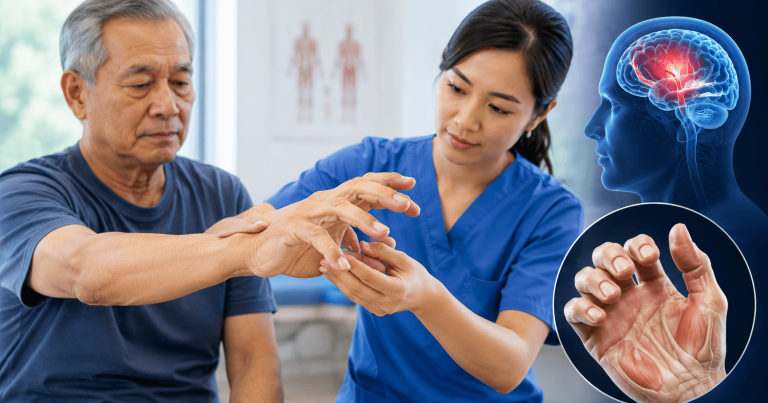
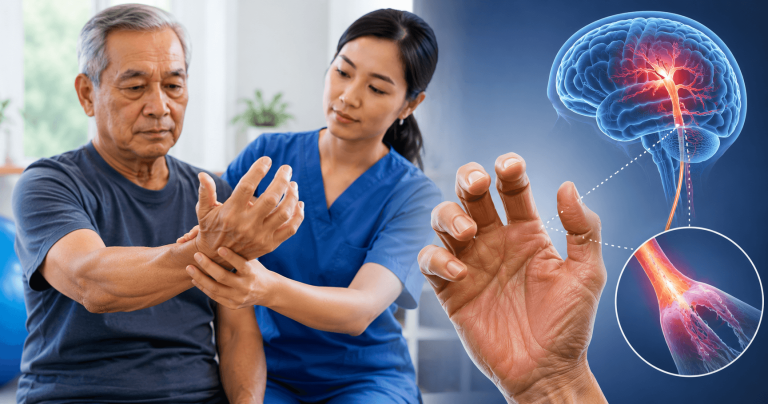
A stroke affects blood flow to the brain, damaging areas responsible for movement control. When the motor cortex or neural pathways controlling the hand are affected, the communication between brain and muscles becomes disrupted.
This leads to two major problems:
- Weakness in voluntary movement
- Overactivity of certain muscles (spasticity)
In many patients, the hand gradually develops a clenched posture. This is not just muscle tightness—it is a neurological condition where the brain is no longer regulating muscle tone properly. Clinically, this condition is often seen in the first few weeks after stroke and may worsen if the hand is not moved regularly or therapy is delayed.
Why Finger Stiffness After Stroke Happens
Understanding the cause helps patients stay realistic and committed to rehabilitation.
1. Damage to Motor Pathways
When stroke affects upper motor neurons, the brain loses fine control over hand movements. This leads to poor coordination and stiffness.
2. Spasticity (Muscle Overactivity)
Muscles in the hand become overactive due to disrupted inhibitory signals from the brain. Instead of relaxing, they stay partially contracted.
3. Lack of Early Movement
If the hand is not moved in the early stages, joints become stiff and connective tissues tighten. This makes recovery harder later.
4. Muscle Imbalance
Flexor muscles (which close the hand) become stronger than extensor muscles (which open the hand), leading to a clenched fist posture.
5. Secondary Joint Contracture
Over time, untreated stiffness can lead to permanent shortening of soft tissues around the joints. According to the World Health Organization, early rehabilitation significantly reduces long-term disability after stroke by preventing complications like contractures and spasticity progression.
How Physiotherapy Helps Finger Stiffness After Stroke
Stroke rehabilitation is not about forcing movement—it is about retraining the brain and restoring communication between the brain and hand through neuroplasticity.
At Varia Physiotherapy Clinic, treatment is divided into structured phases based on neurological recovery principles.
Step 1: Detailed Neurological Assessment
We evaluate:
- Muscle tone (spasticity grading)
- Passive and active range of motion
- Finger joint stiffness pattern
- Grip strength and release ability
- Functional hand use in daily activities
This helps identify whether the limitation is neurological, muscular, or joint-based.
Step 2: Spasticity Management & Muscle Relaxation
Before strengthening, stiffness must be reduced. Techniques include:
- Prolonged gentle stretching of finger flexors
- Slow rhythmic mobilization
- Weight-bearing through the affected arm
- Proper hand positioning using splints (if required)
These methods help reduce abnormal reflex activity and prepare the hand for active movement.
Step 3: Joint Mobility Restoration
Finger joints are small and prone to stiffness. Manual therapy is used to:
- Improve joint capsule flexibility
- Prevent adhesions
- Maintain tendon glide
- Reduce pain during movement
Even small improvements in joint mobility can significantly improve functional hand use.
Step 4: Neuroplasticity-Based Training (Core Recovery Phase)
This is the most important part of rehabilitation for finger stiffness after a stroke.
Techniques include:
- Mirror therapy to retrain brain perception
- Repetitive task practice (open-close movements)
- Electrical stimulation (when indicated)
- Sensory retraining (texture recognition, touch awareness)
The goal is to “re-teach” the brain how to activate hand muscles correctly. Research from the National Institutes of Health confirms that repetitive task-based therapy significantly improves motor recovery after stroke.
Step 5: Functional Hand Training
Recovery must translate into real-life ability. Patients practice:
- Holding cups and bottles
- Eating with utensils
- Writing and grasping objects
- Dressing tasks like buttoning
This ensures the recovery is meaningful, not just clinical improvement.
Step 6: Home Exercise Program
Recovery continues outside the clinic. Patients are guided with:
- Daily stretching routines
- Assisted finger opening exercises
- Stress ball or soft object gripping
- Positioning strategies during rest
Consistency is more important than intensity in neuro-rehabilitation.
Real Patient Case Example (Ahmedabad)
A 62-year-old patient visited our clinic with severe finger stiffness after a stroke, three weeks after discharge from the hospital. His fingers were tightly clenched, and he was unable to voluntarily open his hand.
Initially, even passive stretching caused discomfort, and progress seemed minimal in the first 10–12 days. However, therapy was continued with controlled stretching, mirror therapy, and guided assisted movements.
By week 6, slight voluntary finger opening began. By week 12, he regained partial grip function and could hold light objects like a spoon and mobile phone with assistance.
The most important improvement was independence in feeding, which significantly improved his confidence and quality of life.
This case reflects a key neurological principle: recovery is slow, non-linear, and dependent on repetition and brain adaptation.
Myths vs Facts
Myth 1: Finger stiffness is permanent
Fact: Many patients improve with consistent neuro-rehabilitation.
Myth 2: Rest helps recovery
Fact: Lack of movement worsens stiffness and contractures.
Myth 3: Only medicine can treat stiffness
Fact: Physiotherapy is the primary treatment for functional recovery.
Myth 4: Recovery should be fast
Fact: Stroke recovery often takes months or longer.
When to See a Physiotherapist
Seek immediate rehabilitation if:
- Fingers are curling or tightening
- Hand cannot open voluntarily
- Daily activities are becoming difficult
- Stiffness is increasing week by week
- Pain or abnormal muscle tightness is present
Early intervention significantly improves recovery outcomes.
What Not to Do
Patients and families should avoid:
- Forcefully pulling fingers without guidance
- Ignoring stiffness in early stages
- Skipping therapy sessions
- Relying only on medication
- Overusing the unaffected hand exclusively
Incorrect handling can delay recovery.
Conclusion
Finger stiffness after stroke is a complex neurological condition, but it is not the end of functional recovery. With early diagnosis, structured physiotherapy, and consistent neuro-rehabilitation, patients can regain meaningful hand function and independence in daily life.
At Varia Physiotherapy Clinic, our approach focuses on restoring brain-hand communication through evidence-based techniques, patient education, and long-term rehabilitation planning.
The key message is simple: recovery is possible, but it requires patience, repetition, and expert-guided therapy.
If you or your loved one is experiencing hand stiffness after a stroke, early physiotherapy intervention can make a life-changing difference.
Book a Professional Assessment
If you’re unsure whether your symptoms need attention, it’s okay to start with a simple consultation. Understanding your condition is the first step toward recovery—no pressure, just guidance.
If you’d like to speak with a physiotherapist or book an assessment at Varia Physiotherapy Clinic, you can reach out here:
 Call: +91 95123 79555
 Email: hello.drhetalvaria@gmail.com
 Website: www.variaphysiotherapyclinic.com
Our team is here to listen, assess, and guide you toward safe and effective recovery.
Finger Stiffness After Stroke - FAQs