
What Happens During The First Stroke Physiotherapy Session?
A stroke can change life in an instant. One day, simple tasks like walking, holding a cup, or speaking clearly feel normal—and the next, they may feel difficult or even impossible. For many patients and families, the first few days after a stroke are filled with uncertainty.
One of the most common questions we hear at Varia Physiotherapy Clinic in Ahmedabad is: What happens during the first stroke physiotherapy session?
It’s a valid question.
For someone recovering from a stroke, physiotherapy is often one of the first major steps toward regaining independence. But many people feel nervous before their first appointment because they don’t know what to expect.
The truth is, the first physiotherapy session is not about pushing the body too hard. It’s about understanding what the body can do, identifying limitations, and creating a safe, realistic recovery plan.
At Varia Physiotherapy Clinic, we often meet patients within days or weeks after a stroke. Some arrive unable to stand. Others have weakness on one side, balance issues, or difficulty using their hands. Every recovery journey begins differently.
This guide explains exactly what happens during the first stroke physiotherapy session and why it matters.
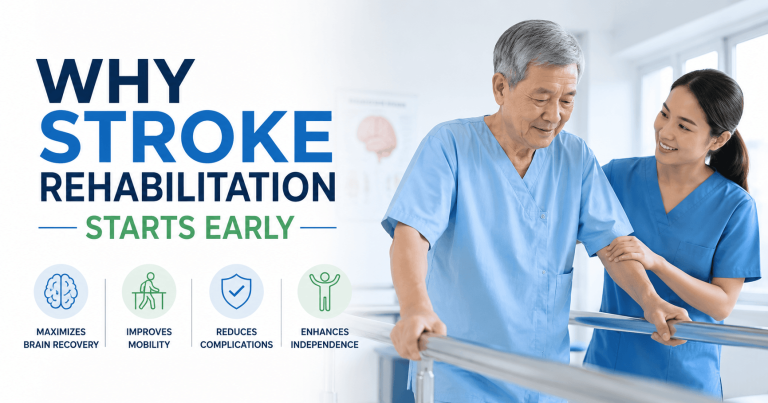
Why Stroke Rehabilitation Starts Early
According to the World Health Organization (WHO), stroke is one of the leading causes of disability worldwide. Early rehabilitation improves recovery outcomes and helps prevent complications like muscle stiffness, joint pain, and loss of mobility.
Similarly, the National Institutes of Health (NIH) highlights that intensive rehabilitation can support neuroplasticity—the brain’s ability to reorganize itself after injury.
In simple terms:
The earlier therapy begins, the better the brain can relearn lost movements. That does not mean recovery is immediate.
Stroke recovery often takes weeks, months, or even longer depending on:
- Type of stroke
- Severity of brain injury
- Age
- Existing health conditions
- Motivation and consistency in therapy
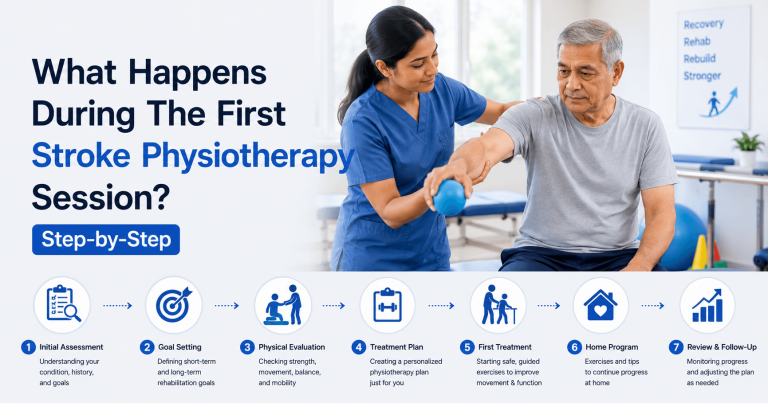
What Happens During The First Stroke Physiotherapy Session? Step-by-Step
1. Detailed Medical History Review
The first thing your physiotherapist will do is understand your medical background.
This usually includes:
- When the stroke happened
- Type of stroke (ischemic or hemorrhagic)
- Which side of the body is affected
- Current medications
- Hospital reports or scans
- Existing conditions like diabetes or hypertension
At Varia Physiotherapy Clinic, this helps us identify risk factors and tailor the rehabilitation safely.
For example:
A patient with uncontrolled blood pressure may need slower progression. A patient with swallowing difficulties may need neurologist coordination.
2. Physical Assessment
This is the most important part of the first session.
Your physiotherapist will carefully assess:
Muscle Strength
Stroke often weakens one side of the body (hemiparesis).
We test:
- Arm strength
- Leg strength
- Grip strength
Balance
Can you sit without support?
Can you stand safely?
Can you shift weight?
Balance testing helps reduce fall risk.
Range of Motion
After a stroke, joints may become stiff.
We check:
- Shoulder movement
- Knee bending
- Ankle mobility
Muscle Tone
Some patients experience spasticity (tight muscles).
Others experience flaccidity (very weak muscles).
Both need different treatment approaches.
Functional Ability
Can you:
- Roll in bed?
- Sit up?
- Transfer from bed to chair?
- Walk?
This tells us where to begin.
3. Pain Evaluation
Many people don’t realize stroke recovery can involve pain.
Common problems include:
- Shoulder pain
- Back pain
- Muscle tightness
- Joint stiffness
Pain changes how we approach therapy.
If pain is severe, we may adjust exercises or recommend orthopedic consultation.
4. Gait Analysis
If walking is possible, we observe:
- Step length
- Weight bearing
- Foot placement
- Knee stability
- Walking speed
At Varia Physiotherapy Clinic, gait analysis helps us understand whether walking aids are needed.
Examples:
- Walker
- Quad cane
- Ankle-foot orthosis (AFO)
5. Goal Setting
A structured stroke physiotherapy treatment in Ahmedabad ensures these goals are realistic and achievable.
Instead of vague goals like “getting better,” we create measurable goals:
Short-term:
- Sit independently for 10 minutes
- Stand with support
- Improve hand grip
Long-term:
- Walk independently
- Climb stairs
- Return to work
- Improve daily activities
Every stroke recovery plan is personal.
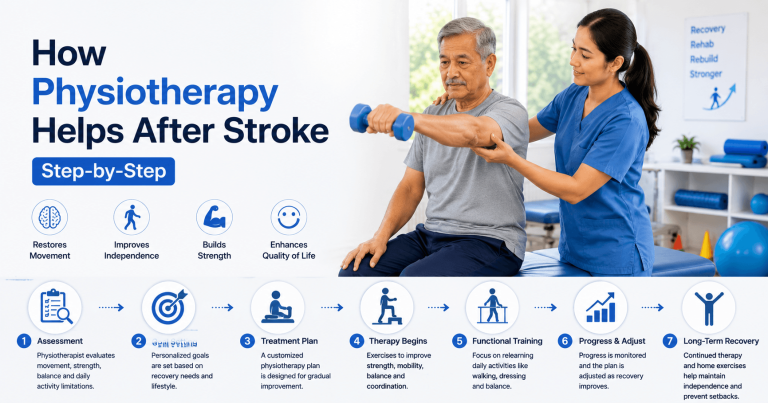
How Physiotherapy Helps After Stroke
After understanding what happens during the first stroke physiotherapy session, the next step is treatment.
Treatment often includes:
Bed Mobility Training
For patients unable to move independently.
Focuses on:
- Turning in bed
- Sitting up
- Positioning
This prevents bed sores and stiffness.
Balance Training
Essential for fall prevention.
Exercises may include:
- Sitting balance
- Standing balance
- Weight shifting
- Reach training
Strengthening Exercises
Weak muscles need gradual activation.
We use:
- Assisted movements
- Resistance bands
- Functional strengthening
Walking Retraining
Walking recovery requires repetition.
We may use:
- Parallel bars
- Supported walking
- Step training
Hand Function Training
Hand recovery is often slower.
Exercises target:
- Gripping
- Releasing
- Finger coordination
- Object manipulation
A Real Patient Story From Varia Physiotherapy Clinic
A 58-year-old businessman from Ahmedabad came to us two weeks after a left-sided stroke. His right arm was weak. He couldn’t walk without support. His family was worried he would never regain independence.
During his first session
The first session focused on understanding his current condition, not rushing into exercises. We carefully listened to his difficulties and assessed how the stroke had affected his movement and daily function.
We assessed his strength, posture, balance, and gait
A detailed physical assessment helped us identify where his body needed the most support. This allowed us to build a treatment plan based on his real challenges rather than a one-size-fits-all approach.
We noticed severe shoulder stiffness and poor trunk control
These are common after stroke and can make simple tasks like sitting or reaching difficult. Identifying these early helps prevent pain and improves overall recovery outcomes.
The first week focused only on proper positioning
Correct body positioning is essential in the early stage of stroke recovery. It helps reduce muscle tightness, prevents pressure sores, and protects weak joints from unnecessary strain.
Gentle mobility
Instead of forcing movement, we began with gentle guided exercises to keep the joints flexible and improve blood circulation. This builds a safe foundation for future active rehabilitation.
Sitting balance
Regaining sitting balance is often one of the earliest and most important goals. It helps patients feel stable, reduces fall risk, and prepares the body for standing and walking.
Weight transfer
Learning to shift weight safely from one side to the other helps rebuild confidence and improves body awareness. This is a key step before independent standing and walking can begin.
By week four: He was standing with minimal support
With regular therapy and family support, his strength and control gradually improved. Standing again was an important milestone that showed his body was responding well to rehabilitation.
By week eight: He was walking indoors with a cane
Walking with support marked a major step toward independence. While it was not full recovery yet, it gave him confidence to move safely within his home.
His hand recovery took longer, but progress continued
Hand and finger movements often take more time because they require fine motor control. Consistent therapy and repetition are important for improving hand function over time.
This is common
Every stroke recovery journey is different. Some patients recover faster in certain areas, while others need more time depending on the severity and location of the stroke.
Stroke recovery is rarely linear
Progress does not always happen in a straight line. Some days feel encouraging, while others may feel slower, but both are a normal part of the healing process.
Some functions return quickly
Basic movements like sitting or standing may improve earlier because they rely on larger muscle groups. Early improvements often help motivate patients to stay consistent with therapy.
Others need patience
More complex functions like hand coordination, balance, or speech can take longer. Recovery requires time, repetition, and realistic expectations guided by professional care.
Common Myths vs Facts
Myth: Physiotherapy starts only after full hospital discharge.
Fact: Early therapy often starts in the hospital.
Myth: If movement doesn’t return in one month, it never will.
Fact: Recovery can continue for months or years.
Myth: Stroke physiotherapy is only about walking.
Fact: It also focuses on balance, arm function, posture, and daily independence.
Myth: Rest is better than movement.
Fact: Controlled movement improves recovery.
When Should You See a Physiotherapist After Stroke?
You should seek physiotherapy if you notice:
- Weakness on one side
- Difficulty standing
- Balance problems
- Hand weakness
- Walking difficulty
- Muscle stiffness
- Shoulder pain
- Frequent falls
You should also consult a neurologist if:
- Symptoms suddenly worsen
- New weakness appears
- Severe headaches develop
- Seizures occur
You may need an orthopedic referral if:
- Joint pain limits movement
- Shoulder dislocation occurs
- Fractures happen after falls
Recovery is a team effort.
Conclusion
If you’ve been wondering what happens during the first stroke physiotherapy session, the answer is simple:
It is the foundation of recovery. It’s where the physiotherapist understands the patient’s current abilities, identifies risks, and creates a safe plan forward.
At Varia Physiotherapy Clinic in Ahmedabad, we believe stroke recovery should be compassionate, structured, and realistic.
There are no shortcuts. But with early intervention, consistency, and expert guidance, meaningful improvement is possible.
If you or your loved one is recovering after a stroke, seeking professional physiotherapy early can make a significant difference.
Book an assessment and understand the next best step for recovery.
Book a Professional Assessment
If you’re unsure whether your symptoms need attention, it’s okay to start with a simple consultation. Understanding your condition is the first step toward recovery—no pressure, just guidance.
If you’d like to speak with a physiotherapist or book an assessment at Varia Physiotherapy Clinic, you can reach out here:
 Call: +91 95123 79555
 Email: hello.drhetalvaria@gmail.com
 Website: www.variaphysiotherapyclinic.com
Our team is here to listen, assess, and guide you toward safe and effective recovery.
What Happens During The First Stroke Physiotherapy Session - FAQs
1. How long is the first stroke physiotherapy session?
2. Is the first session painful?
3. Can physiotherapy fully cure stroke?
4. How many sessions are needed?
5. Can stroke patients recover from walking?
About the Author

Dr. Hetal M Varia
After a rich experience of working in US healthcare as manager and licensed physiotherapist in US for last 11 years, she has returned home with a vision to become pioneer of Vestibular Therapy and specialized Parkinson physiotherapy in Ahmedabad. With her special skills and expertise in vertigo, Parkinson, balance and movement disorders therapy, Dr. Varia is committed to provide US standards of therapy services , compassionate and patient centered care to our people and community. With a vision of the world where everyone walks strong & steady, she intends to empower individuals with vestibular and neurological disorders through specialized care, rehabilitation & innovative therapies to improve mobility, balance & overall quality of life!