How Much Does Physiotherapy Cost After Stroke? Complete Guide
When a stroke happens, life changes in an instant—not just for the patient, but for the entire family. One of the first questions people ask after discharge is: How Much Does Physiotherapy Cost After Stroke? Complete Guide and more importantly, “Will my loved one recover fully?”
At Varia Physiotherapy Clinic in Ahmedabad, we meet families every day who feel overwhelmed by uncertainty. Some patients struggle to walk again, others face weak arms, speech difficulty, balance problems, or complete dependency on caregivers.
Physiotherapy becomes the bridge between hospital care and real-life independence. But the cost is only one part of a much bigger picture—the real focus is restoring movement, dignity, and confidence step by step.
This guide explains not only the cost but also the treatment process, recovery expectations, and what truly influences rehabilitation outcomes after stroke.
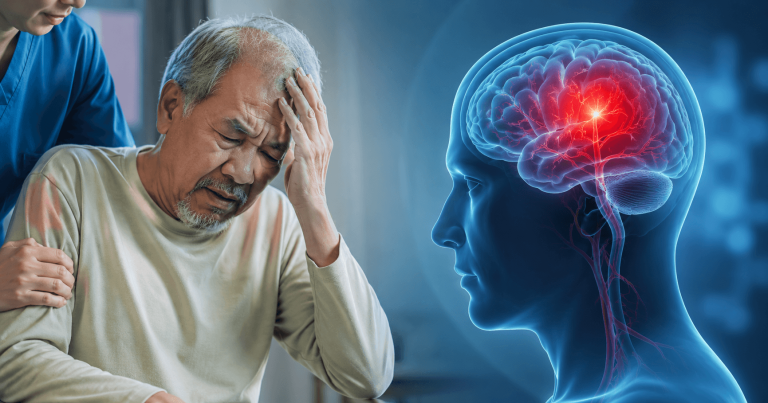
What Happens After a Stroke?
A stroke occurs when blood flow to the brain is interrupted, leading to damage in areas that control movement, speech, or coordination. According to the World Health Organization (WHO), stroke is one of the leading causes of long-term disability worldwide.
Depending on which part of the brain is affected, patients may experience:
Weakness or Paralysis on One Side of the Body
This is one of the most common effects after stroke, where movement becomes reduced or absent on one side of the body. Early physiotherapy helps stimulate affected muscles and prevent long-term stiffness.
Difficulty Walking or Maintaining Balance
Stroke can affect the brain’s ability to coordinate balance and leg movement, making walking unsafe or unstable. Guided gait training helps patients regain confidence and improve safe mobility.
Stiff Muscles (Spasticity)
Muscle stiffness or tightness may develop after stroke due to disrupted nerve signals. Physiotherapy uses stretching and positioning techniques to reduce discomfort and improve flexibility.
Poor Coordination
Patients may find it difficult to control smooth, precise movements like reaching or grasping objects. Targeted neuro-rehabilitation exercises help retrain coordination through repetitive practice.
Fatigue and Reduced Endurance
Many stroke survivors experience low energy levels even during simple tasks. Gradual, structured activity programs help rebuild stamina without overexerting the body.
Difficulty Performing Daily Activities
Basic tasks like dressing, eating, or bathing may become challenging after a stroke. Occupational-focused physiotherapy supports independence through step-by-step functional training.
At Varia Physiotherapy Clinic, we often see patients discharged from hospitals with minimal movement ability and unclear recovery guidance. This is where structured physiotherapy becomes essential.
What Influences Physiotherapy Cost After Stroke?
The cost of stroke rehabilitation is not fixed. It varies based on the patient’s condition, recovery stage, and therapy requirements.
Key factors include:
1. Severity of Stroke
The extent of brain damage directly affects recovery needs. Patients with mild stroke may regain function faster with fewer sessions, while severe paralysis requires structured, long-term rehabilitation.At Varia Physiotherapy Clinic, treatment intensity is always based on clinical assessment and patient safety.
2. Type of Therapy Required
Different stroke conditions need different physiotherapy techniques such as NDT, gait training, balance retraining, and muscle stimulation. Each method targets specific movement and neurological recovery goals.A tailored combination is selected after evaluating the patient’s functional abilities and limitations.
3. Duration of Recovery
Stroke rehabilitation is a gradual process and often takes 3–12 months or longer, depending on brain healing and patient consistency.Progress may be slow at times, but steady therapy supports long-term improvement in mobility and independence.
4. Home-Based vs Clinic-Based Therapy
Home physiotherapy is essential for bedridden or severely limited patients, while clinic sessions allow more advanced equipment-based training.The choice depends on safety, mobility level, and the stage of recovery, ensuring comfort without compromising care quality.
5. Assistive Devices
Tools like walkers, braces, and support belts help patients move safely during early recovery stages. These devices reduce fall risk and improve confidence while relearning walking patterns.They are introduced only when clinically appropriate and adjusted as recovery progresses.
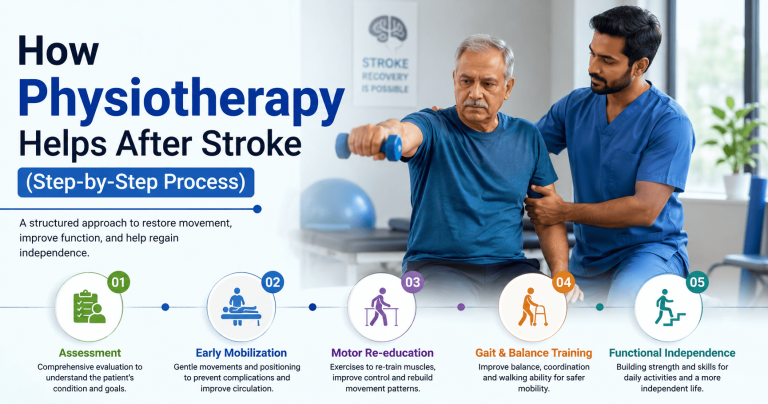
How Physiotherapy Helps After Stroke (Step-by-Step Process)
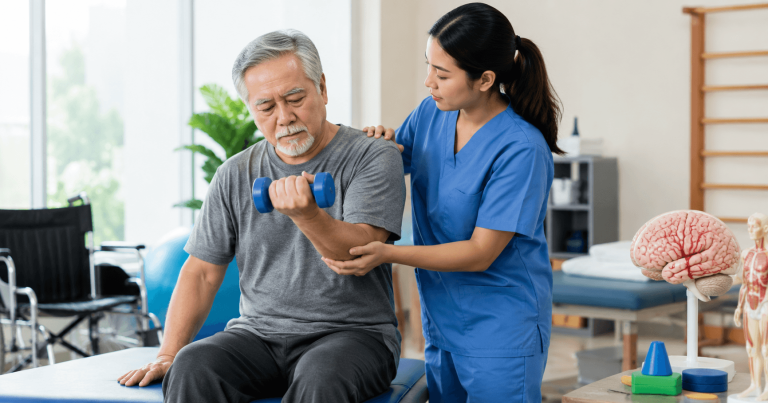
Stroke rehabilitation is highly structured and personalized. At Varia Physiotherapy Clinic, we follow an evidence-based, phase-wise approach:
Step 1: Comprehensive Neurological Assessment
We evaluate:
- Muscle strength
- Reflex activity
- Balance and posture
- Walking pattern (if possible)
- Functional independence level
This helps us design a realistic recovery plan instead of a generic routine.
Step 2: Early Mobilization (Preventing Complications)
In early stages, physiotherapy focuses on:
- Preventing bed sores
- Reducing stiffness
- Maintaining joint flexibility
- Improving blood circulation
Even small movements play a critical role in brain recovery.
Step 3: Motor Re-education
The brain must “re-learn” movement patterns. We use:
- Repetitive task training
- Assisted limb movements
- Mirror therapy
- Functional exercises (sitting, standing, reaching)
Step 4: Gait and Balance Training
For patients who can stand or walk partially:
- Parallel bar walking
- Weight-shifting exercises
- Balance board training
- Step training
Step 5: Functional Independence Training
The final stage focuses on real-life tasks:
- Dressing
- Eating independently
- Toilet transfers
- Stair climbing
Real Patient Scenario (From Clinical Experience)
A 58-year-old male from Ahmedabad came to Varia Physiotherapy Clinic after a right-side stroke. He had significant weakness on his left side, difficulty maintaining sitting balance, and complete dependence on family members for daily activities. The primary goal at this stage was to stabilize his condition and begin safe, guided rehabilitation.
Initial Condition
He presented with complete weakness in the left arm and leg, along with severe imbalance and inability to sit without support. This level of impairment is common after a major stroke and requires immediate, structured neuro-rehabilitation to prevent stiffness and secondary complications.
First 4 Weeks
During the early phase, therapy focused on proper positioning, gentle assisted movements, and preventing joint stiffness and muscle shortening. These foundational steps are critical to protect the body and prepare the nervous system for future recovery.
2–3 Months
With consistent physiotherapy, he gradually progressed to standing with support and taking a few assisted steps. At this stage, the focus shifted toward balance training, weight shifting, and re-educating basic walking patterns.
6 Months
By six months, he was able to walk short distances using a walker and perform basic self-care activities with reduced assistance. This improvement reflected steady neuroplastic recovery supported by regular therapy and family involvement.
Important Insight
Recovery after stroke is rarely linear. Some weeks showed noticeable improvement, while others were slower. However, consistent physiotherapy, patience, and adherence to the rehabilitation plan played a far greater role than intensity alone in achieving meaningful progress.
This is why physiotherapy cost must always be viewed alongside recovery value, not just numbers. You can explore a complete breakdown in our guide on cost breakdown after stroke therapy.
Myths vs Facts About Stroke Physiotherapy
Myth 1: Recovery happens within a few weeks
Fact: Stroke recovery often takes months or longer, depending on brain healing and therapy consistency.
Myth 2: Physiotherapy is only for walking
Fact: It also improves hand function, balance, speech coordination support, and daily independence.
Myth 3: Once progress stops, therapy is useless
Fact: The brain continues to adapt (neuroplasticity), even in slow stages of recovery.
Myth 4: Home exercises are enough
Fact: Professional supervision is needed to avoid incorrect movement patterns and injuries.
When Should You See a Physiotherapist?
You should consult a physiotherapist immediately after medical stabilization if:
- The patient has weakness or paralysis
- There is difficulty sitting or standing
- Muscle stiffness is increasing
- Walking is unsafe or unbalanced
- Daily activities cannot be performed independently
In some cases, we coordinate with neurologists if:
- Progress is very slow
- Severe spasticity is present
- Medication adjustment is needed
Conclusion
The cost of physiotherapy after a stroke varies, but the real focus should be on recovery and quality of life rather than expense alone. Stroke rehabilitation is a gradual process that requires consistent, expert-guided physiotherapy to restore movement, balance, and independence.
At Varia Physiotherapy Clinic in Ahmedabad, we provide personalized neuro-rehabilitation plans based on each patient’s condition to ensure realistic and effective recovery outcomes. Early and regular physiotherapy can significantly improve a patient’s ability to return to daily activities with confidence.
Book a Professional Assessment
If you’re unsure whether your symptoms need attention, it’s okay to start with a simple consultation. Understanding your condition is the first step toward recovery—no pressure, just guidance.
If you’d like to speak with a physiotherapist or book an assessment at Varia Physiotherapy Clinic, you can reach out here:
 Call: +91 95123 79555
 Email: hello.drhetalvaria@gmail.com
 Website: www.variaphysiotherapyclinic.com
Our team is here to listen, assess, and guide you toward safe and effective recovery.
Physiotherapy Treatment For Ligament Injury
- FAQs