
Home Physiotherapy For Stroke Patients | Recover Comfortably At Home
Stroke recovery is not only a medical process—it is a life-changing journey that affects how a person moves, speaks, thinks, and participates in daily life. At Varia Physiotherapy Clinic in Ahmedabad, we regularly meet families who return home after hospital discharge feeling uncertain, anxious, and emotionally exhausted.
One of the most common questions we hear is simple yet deeply important: “What happens now? How will my loved one regain movement and independence at home?”
This is where Home Physiotherapy For Stroke Patients | Recover Comfortably At Home becomes a critical part of rehabilitation. It ensures that recovery does not stop at the hospital door but continues in a structured, safe, and familiar environment where the patient feels more relaxed and motivated.
However, it is equally important to understand that home physiotherapy is not informal exercise support. It is a clinically guided, neuro-rehabilitation process designed using medical assessment, evidence-based techniques, and long-term functional goals.
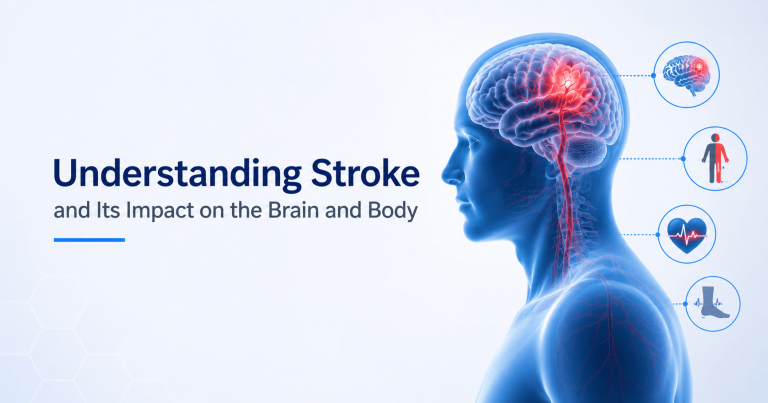
Understanding Stroke and Its Impact on the Brain and Body
A stroke occurs when blood supply to a part of the brain is reduced or blocked, leading to damage in brain cells. Depending on the affected area, a stroke can impact movement, speech, balance, vision, or cognition.
According to the World Health Organization, stroke remains one of the leading causes of long-term disability worldwide, especially when rehabilitation is delayed or inconsistent.
The World Health Organization emphasizes that early and continuous rehabilitation significantly improves functional outcomes and reduces long-term disability.
At our clinic, stroke survivors commonly experience:
- Weakness or paralysis on one side of the body (hemiparesis)
- Difficulty walking or maintaining balance
- Muscle stiffness or abnormal tightness (spasticity)
- Poor coordination of hand and arm movements
- Fatigue and reduced endurance
- Difficulty with daily activities like eating, dressing, or bathing
These symptoms do not just affect the body—they also affect confidence, emotional health, and family dynamics.
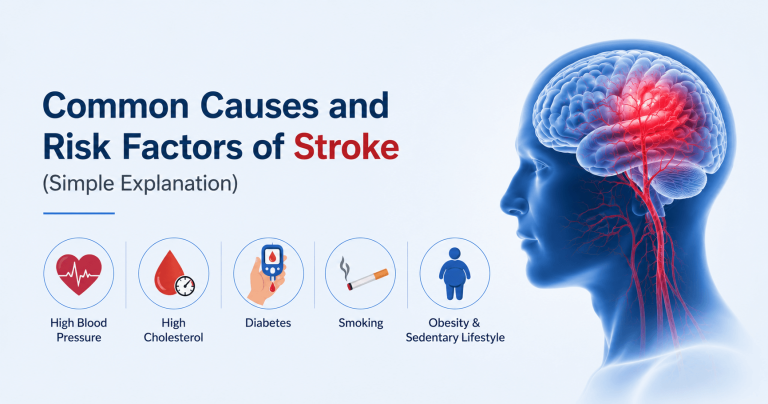
Common Causes and Risk Factors of Stroke (Simple Explanation)
Although stroke is a brain event, it is usually linked to underlying health and lifestyle conditions. Understanding these helps prevent recurrence and supports long-term recovery.
The most common risk factors include:
- High blood pressure (hypertension)
- Diabetes mellitus
- High cholesterol levels
- Heart rhythm problems such as atrial fibrillation
- Sedentary lifestyle and lack of physical activity
- Smoking and alcohol consumption
- Chronic stress and poor sleep patterns
In many patients we see in Ahmedabad, stroke often occurs suddenly, but the risk factors build up silently over years. This is why long-term lifestyle management is just as important as rehabilitation.
Why Home Physiotherapy Matters After Stroke
After hospital discharge, patients often face a gap in care. They may not be able to travel easily, or outpatient therapy may not be frequent enough. Home physiotherapy bridges this gap by bringing structured neuro-rehabilitation directly to the patient’s environment.
At Varia Physiotherapy Clinic, home sessions are designed to:
- Ensure continuity of neuro-rehabilitation
- Reduce risk of falls and injuries during travel
- Increase comfort and emotional confidence
- Involve family members in recovery
- Improve consistency of therapy sessions
Recovery after stroke depends heavily on repetition, safety, and guided movement practice—not just intensity.
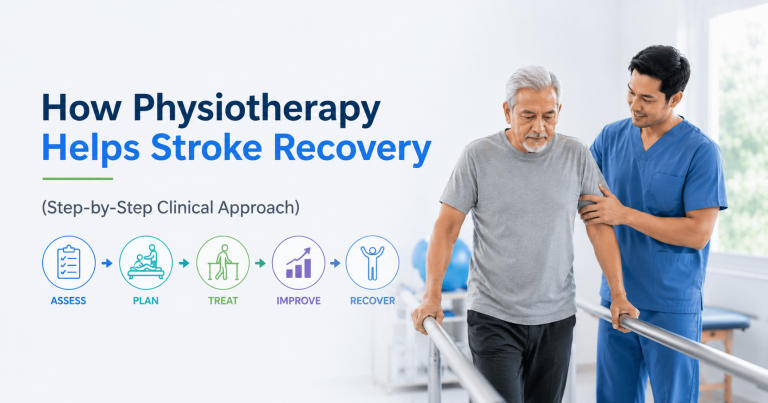
How Physiotherapy Helps Stroke Recovery (Step-by-Step Clinical Approach)
At Varia Physiotherapy Clinic, every home physiotherapy plan begins with a structured neurological assessment. This ensures that treatment is safe, personalized, and goal-oriented.
1. Detailed Neuro-Functional Assessment at Home
We evaluate:
- Muscle strength and tone (spasticity or weakness)
- Joint flexibility and stiffness
- Balance in sitting and standing positions
- Gait pattern (walking ability)
- Functional independence (bed mobility, transfers, self-care ability)
This assessment helps us identify which brain-body functions are affected and what stage of recovery the patient is in.
2. Early Rehabilitation and Prevention of Complications
In early stages after stroke, preventing complications is a priority.
We focus on:
- Correct positioning in bed to avoid pressure sores
- Passive range of motion exercises to prevent stiffness
- Gentle limb mobilization to maintain circulation
- Chest and breathing exercises to prevent respiratory complications
These interventions may appear simple, but they play a major role in preventing secondary complications.
3. Neuroplasticity-Based Rehabilitation (Brain Relearning Process)
One of the most important scientific principles in stroke recovery is neuroplasticity—the brain’s ability to reorganize itself and form new neural pathways.
Research from the National Institutes of Health supports task-specific and repetitive training as one of the most effective ways to improve motor recovery after stroke.
National Institutes of Health highlights that consistent, repetitive functional training helps the brain “relearn” lost movements.
Neuroplasticity is the foundation of stroke rehabilitation and explains why stroke recovery at home with physiotherapy support can lead to meaningful functional improvements over time.
4. Gait Training and Balance Rehabilitation
Walking is often the biggest milestone for stroke survivors and families.
We focus on:
- Assisted walking with support devices if required
- Balance correction exercises in safe environments
- Weight shifting from affected to unaffected side
- Step training and coordination drills
- Posture correction during standing and walking
Progress is always gradual and based on patient safety and endurance.
5. Functional Independence Training in Real-Life Settings
Recovery is meaningful only when it improves daily life.
We train patients for:
- Getting in and out of bed independently
- Using bathroom safely
- Eating and drinking with improved hand control
- Dressing and grooming activities
- Navigating short distances at home
This makes rehabilitation practical and directly connected to real-world independence.
Real Patient Experience
A 62-year-old male patient from Ahmedabad was referred to us after a right-sided stroke. He had significant weakness in his left arm and leg and required full assistance for walking and daily activities. Traveling to a clinic was difficult, so we initiated Home Physiotherapy For Stroke Patients | Recover Comfortably At Home.
Treatment Plan:
- Daily mobility and positioning exercises
- Assisted sitting and standing practice
- Gradual gait training using a walker
- Hand function training using task-based exercises
- Family education for safe transfer techniques
Outcome after 8 weeks:
- Improved standing balance with support
- Partial return of hand grip function
- Able to walk short distances with assistance
- Increased confidence and reduced fear of falling
Recovery was steady and realistic. Not complete recovery, but meaningful improvement in independence and quality of life.
Myths vs Facts About Stroke Physiotherapy
Myth 1: Recovery happens only in hospitals
Fact: Rehabilitation continues for months and requires consistent home-based therapy after discharge.
Myth 2: Rest is better than movement
Fact: Controlled movement improves circulation and enhances brain recovery.
Myth 3: No improvement means therapy is ineffective
Fact: Neurological recovery is gradual. Even small improvements are clinically significant.
Myth 4: Only young patients recover well
Fact: Recovery depends more on brain involvement, timing of therapy, and consistency—not just age.
When Should You Start Physiotherapy?
You should begin home physiotherapy if:
- The patient has been medically stabilized after stroke
- There is difficulty walking or moving limbs
- Balance is poor or there is risk of falls
- Daily activities require full assistance
- Muscle stiffness or tightness is developing
Early intervention improves long-term outcomes significantly.
Realistic Recovery Timeline
Understanding recovery expectations is very important for families.
- 0–3 months: Rapid neurological recovery phase
- 3–6 months: Functional improvements become noticeable
- 6–12 months: Strength, coordination, and independence improve gradually
- Beyond 1 year: Maintenance and advanced functional training phase
Recovery is not linear. Some days show progress, others may feel slow. This is normal in neurological rehabilitation. In some cases, collaboration with neurologists or orthopedic specialists may be required for managing spasticity, medications, or associated musculoskeletal issues.
Conclusion
Stroke recovery is a gradual journey that requires patience, consistency, and the right clinical guidance. With structured Home Physiotherapy For Stroke Patients | Recover Comfortably At Home, patients can continue their rehabilitation safely in a familiar environment while improving mobility, balance, and independence step by step.
At Varia Physiotherapy Clinic in Ahmedabad, our focus is on evidence-based neuro-rehabilitation that respects each patient’s pace of recovery. While outcomes vary from person to person, early and consistent physiotherapy can make a meaningful difference in quality of life, daily function, and confidence.
Book a Professional Assessment
If you’re unsure whether your symptoms need attention, it’s okay to start with a simple consultation. Understanding your condition is the first step toward recovery—no pressure, just guidance.
If you’d like to speak with a physiotherapist or book an assessment at Varia Physiotherapy Clinic, you can reach out here:
 Call: +91 95123 79555
 Email: hello.drhetalvaria@gmail.com
 Website: www.variaphysiotherapyclinic.com
Our team is here to listen, assess, and guide you toward safe and effective recovery.
Home Physiotherapy For Stroke Patients - FAQs
1. Is home physiotherapy effective for stroke recovery?
2. How soon should physiotherapy start after a stroke?
3. Can stroke patients regain full recovery?
4. How many sessions are needed weekly?
5. Is equipment required at home?
About the Author

Dr. Hetal M Varia
After a rich experience of working in US healthcare as manager and licensed physiotherapist in US for last 11 years, she has returned home with a vision to become pioneer of Vestibular Therapy and specialized Parkinson physiotherapy in Ahmedabad. With her special skills and expertise in vertigo, Parkinson, balance and movement disorders therapy, Dr. Varia is committed to provide US standards of therapy services , compassionate and patient centered care to our people and community. With a vision of the world where everyone walks strong & steady, she intends to empower individuals with vestibular and neurological disorders through specialized care, rehabilitation & innovative therapies to improve mobility, balance & overall quality of life!