Neuro Physiotherapy For Stroke | Expert Recovery Care
Stroke recovery can feel overwhelming—not just for the patient, but also for their family. When someone survives a stroke, the immediate relief is often followed by new challenges: weakness in one side of the body, difficulty walking, speech issues, stiffness, or loss of balance. At this stage, many families in Ahmedabad start searching for structured rehabilitation that feels both safe and effective.
At Varia Physiotherapy Clinic, we regularly meet patients who are unsure where to begin. Some arrive within days of hospital discharge, while others come months or even years later, believing recovery is no longer possible. The truth is: recovery is always possible to some extent, but it must be guided, realistic, and personalized.
This is where Neuro Physiotherapy For Stroke | Expert Recovery Care becomes essential—not as a quick fix, but as a structured process to help the brain and body relearn lost functions.
Understanding Stroke and Its Impact on Daily Life
A stroke occurs when blood flow to a part of the brain is interrupted, either due to a clot (ischemic stroke) or bleeding (hemorrhagic stroke). According to the World Health Organization, stroke is one of the leading causes of long-term disability worldwide.
When brain cells are damaged, the body loses the ability to control certain movements or sensations. The effects vary widely, but commonly include:
Weakness or paralysis on one side of the body (hemiparesis)
After a stroke, many patients feel reduced strength or complete loss of movement on one side of the body. This can make simple tasks like lifting objects, standing, or using the hand feel difficult. With guided neuro physiotherapy, gradual improvement is possible through repeated movement training.
Difficulty walking or maintaining balance
Walking may feel unstable or unsafe after a stroke, with a higher risk of falling. Patients often describe feeling “off balance” even while standing still. Physiotherapy helps retrain balance reactions and improves walking confidence step by step.
Muscle stiffness or spasticity
Some muscles may become tight or difficult to move after a stroke, making the arm or leg feel stiff. This is a common neurological response and not permanent in many cases. Stretching, positioning, and controlled movement help reduce this stiffness over time.
Poor coordination of hand and arm movements
Simple tasks like holding a glass or buttoning a shirt may become challenging due to reduced coordination. The brain struggles to control fine motor movements after injury. Targeted exercises help rebuild hand function through repeated practice and neuro-retraining techniques.
Speech or swallowing difficulties
Some stroke patients may experience slurred speech or difficulty swallowing safely. This can affect communication and eating comfort. While physiotherapists support overall recovery, speech and swallowing issues are often managed in coordination with specialists.
Fatigue and reduced endurance
Feeling unusually tired after small activities is very common after a stroke. The body uses more energy to perform even basic movements. With structured rehabilitation, stamina gradually improves as strength and movement efficiency return.
At our clinic, many families describe the same concern: “He was fine before the stroke, now even standing feels difficult.” This sudden change is emotionally difficult, but physiotherapy plays a major role in rebuilding independence.
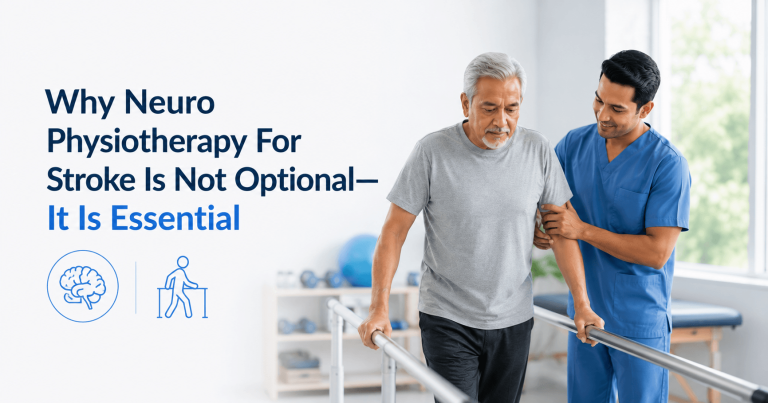
Why Neuro Physiotherapy For Stroke Is Not Optional—It Is Essential
How physiotherapy supports brain recovery:
- Re-educates movement patterns
- Improves muscle activation on the affected side
- Reduces stiffness and spasticity
- Enhances balance and posture control
- Prevents secondary complications like contractures or shoulder pain
At Varia Physiotherapy Clinic, treatment is never generic. Each patient undergoes a detailed neurological assessment including:
- Muscle strength testing
- Balance and gait evaluation
- Functional movement analysis
- Tone and spasticity grading
- Daily activity limitation mapping
Based on this, a personalized rehabilitation plan is created.
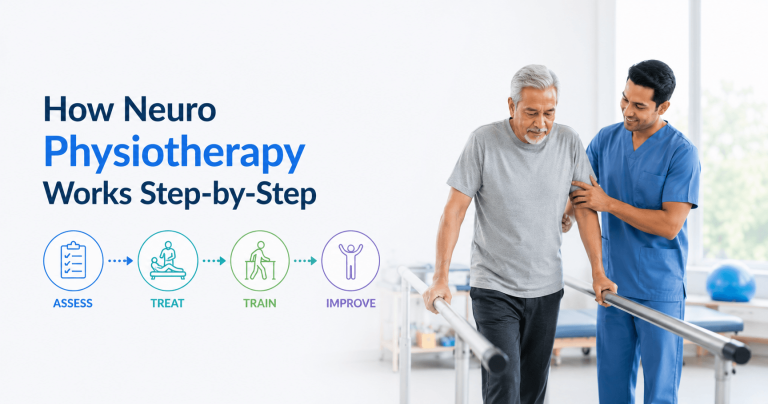
How Neuro Physiotherapy Works Step-by-Step
Stroke rehabilitation is a gradual process. We usually explain it to families in four phases:
1. Early Mobilization Phase
For patients who are newly discharged or bedridden:
- Positioning to prevent stiffness
- Gentle passive movements
- Breathing exercises
- Bed mobility training
2. Activation Phase
Once the patient can sit or stand:
- Assisted standing and weight shifting
- Basic balance training
- Initiation of walking with support
- Muscle re-education exercises
3. Functional Training Phase
Focus shifts to daily activities:
- Walking practice (gait training)
- Stair climbing
- Hand function improvement
- Coordination drills
4. Independence Phase
- Advanced balance training
- Outdoor walking practice
- Dual-task training (walking + cognitive tasks)
- Home exercise program
This structured progression ensures safety while maximizing recovery potential.
Real Patient Scenario
A 58-year-old male patient from Ahmedabad came to us three weeks after a left-sided stroke. He had:
- Right-side weakness
- Difficulty standing without support
- Slurred speech
- Loss of confidence and fear of falling
Initially, he required full assistance for basic movements. We started with bed mobility and gentle activation exercises. Within 4 weeks, he progressed to standing with a walker. By 10 weeks, he was able to walk short distances independently indoors.
His recovery was not “miraculous”—it was consistent, slow, and structured.
What made the difference was:
- Early physiotherapy intervention
- Daily supervised sessions
- Family involvement in home exercises
- Consistency over intensity
This is a common pattern we see at our clinic: progress is possible, but it requires time and discipline.
Myths vs Facts About Stroke Recovery
Myth 1: Recovery is only possible in the first 3 months
Fact: Most improvement happens early, but meaningful recovery can continue for months or even years with proper therapy.
Myth 2: Rest is better than exercise after stroke
Fact: Controlled movement is essential for brain re-training. Complete inactivity slows recovery.
Myth 3: If one side is paralyzed, it will never improve
Fact: Many patients regain partial or significant function through neuroplasticity-based training.
Myth 4: Physiotherapy is painful
Fact: Proper neuro physiotherapy is designed to be safe and tolerable, not painful.
When Should You See a Physiotherapist?
You should consider starting neuro physiotherapy if:
- You or your loved one has recently had a stroke
- There is difficulty walking or balancing
- One side of the body feels weak or stiff
- Daily activities like dressing or eating are difficult
- There is fear of falling or repeated falls
- Recovery has plateaued after hospital discharge
In some cases, we also coordinate with neurologists or orthopedic specialists if there are complications such as severe spasticity, joint deformities, or recurrent neurological symptoms.
How We Plan Treatment at Varia Physiotherapy Clinic
At Varia Physiotherapy Clinic, treatment is not limited to exercise sessions. It includes:
- Clinical neurological assessment
- Goal-based rehabilitation planning
- Progress tracking every 1–2 weeks
- Home exercise guidance for caregivers
- Education for fall prevention and safety
We also integrate advanced techniques such as:
- Task-specific training
- Balance retraining systems
- Functional electrical stimulation (when required)
- Gait re-education strategies
Conclusion
Recovery after stroke is not a straight path—it is a gradual rebuilding of strength, confidence, and independence. With structured rehabilitation, realistic expectations, and consistent effort, many patients can regain meaningful function in daily life.
At Varia Physiotherapy Clinic, our goal is not to promise instant recovery, but to guide patients through a scientifically supported, compassionate rehabilitation journey. Every small movement regained is a step toward independence.
If you or your loved one is struggling after a stroke, early physiotherapy support can make a significant difference in long-term outcomes.
Book a Professional Assessment
If you’re unsure whether your symptoms need attention, it’s okay to start with a simple consultation. Understanding your condition is the first step toward recovery—no pressure, just guidance.
If you’d like to speak with a physiotherapist or book an assessment at Varia Physiotherapy Clinic, you can reach out here:
 Call: +91 95123 79555
 Email: hello.drhetalvaria@gmail.com
 Website: www.variaphysiotherapyclinic.com
Our team is here to listen, assess, and guide you toward safe and effective recovery.
Neuro Physiotherapy For Stroke - FAQs