
Vestibular Rehabilitation For Active Aging And Better Balance Stability
Growing older does not automatically mean giving up independence, confidence, or an active lifestyle. Yet many adults between the ages of 30 and 65 begin noticing subtle balance problems that gradually affect their daily movement. Some people feel unsteady while walking. Others experience dizziness during quick head turns, difficulty maintaining posture on uneven surfaces, or a lack of coordination while climbing stairs.
At Varia Physiotherapy Clinic in Ahmedabad, many patients describe these symptoms as “feeling off-balance,” “walking carefully all the time,” or “losing confidence in movement.” These concerns often impact mobility, endurance, physical activity, and overall wellness.
Vestibular Rehabilitation For Active Aging And Better Balance Stability is a specialized physiotherapy approach designed to improve equilibrium, steadiness, spatial awareness, and dynamic stability through evidence-based exercises and individualized rehabilitation planning. Rather than simply treating symptoms, vestibular physiotherapy focuses on restoring functionality, movement-confidence, and safe locomotion in daily life.
According to the World Health Organization (WHO), falls and balance-related problems are among the leading causes of injury and reduced independence in older adults. Similarly, the National Institutes of Health (NIH) highlights the importance of balance-training and neuromuscular rehabilitation in healthy-aging and fall-prevention strategies.
Understanding Why Balance Stability Changes With Age
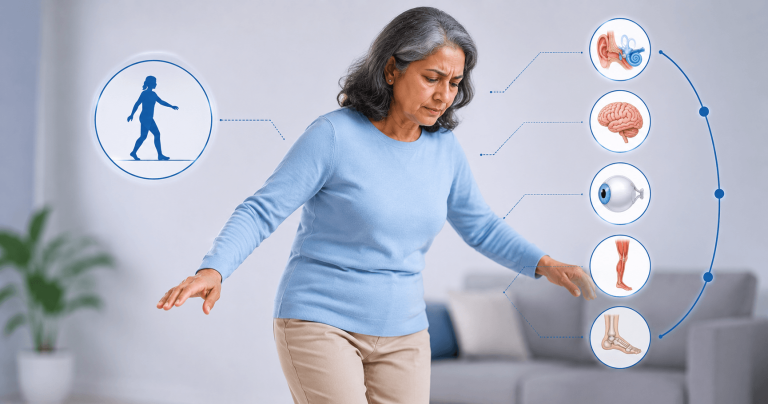
Balance is more complex than most people realize. It depends on proper communication between the vestibular system in the inner ear, the eyes, muscles, joints, and the brain. When one part of this system becomes less efficient, the body may struggle with orientation, posture, coordination, and movement control.
At Varia Physiotherapy Clinic, patients commonly experience:
- Feeling unstable while walking in crowded places
- Dizziness during sudden head movement
- Reduced gait confidence on stairs or uneven roads
- Difficulty maintaining alignment during standing
- Motion sensitivity during travel
- Fear of falling despite normal strength
- Fatigue due to excessive body compensation
Several conditions can contribute to these symptoms:
Vestibular Dysfunction
People experiencing vestibular dysfunction often describe dizziness, imbalance, or difficulty maintaining visual focus during movement. The vestibular system in the inner ear plays an important role in equilibrium, coordination, and postural-control. When this system is affected, everyday activities such as walking, turning, or bending may feel uncomfortable or unstable. Early physiotherapy assessment can help identify movement limitations and support safer rehabilitation.
Age-Related Balance Decline
As people age, natural changes in proprioception, reflexes, flexibility, and coordination may gradually affect balance stability. Many adults notice reduced confidence during walking, slower reactions, or difficulty maintaining dynamic-stability on uneven surfaces. These changes can influence mobility and independence over time. Structured balance-training and physical-activity may help support healthy-aging and safer movement.
Neurological Conditions
Certain neurological conditions can affect sensory processing, gait coordination, and overall locomotion. Individuals may experience unsteadiness, slower movement responses, or difficulty performing routine activities safely. Symptoms can vary depending on the underlying neurological involvement and should be properly evaluated. Physiotherapy rehabilitation often focuses on improving movement-confidence, functional-movement, and neuromuscular control.
Musculoskeletal Weakness
Reduced muscle strength, joint stiffness, and poor posture can interfere with stability and movement-confidence during daily life. Many people compensate with altered walking patterns, which may increase fatigue and physical strain over time. Weakness in the lower limbs and reduced flexibility may also affect balance reactions and functional ability. Targeted physiotherapy exercises can help improve strength, alignment, and mobility-support safely.
Sedentary Lifestyle
Limited physical-activity may gradually reduce endurance, flexibility, coordination, and overall resilience. Over time, inactivity can affect posture, balance reactions, and mobility-support, especially in adults with desk-based routines or reduced exercise habits. Many people also experience decreased confidence during movement after long periods of inactivity. Regular guided movement and rehabilitation exercises can support wellness, stability, and long-term physical functionality.
How Vestibular Rehabilitation For Active Aging And Better Balance Stability Helps
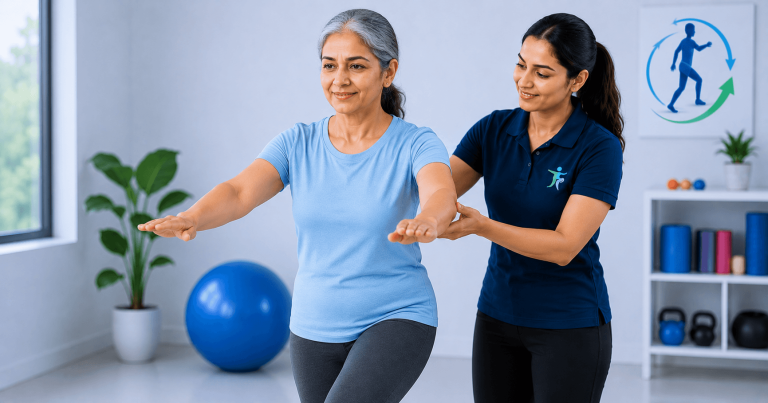
Vestibular rehabilitation for older adults is not a generic exercise program.It is a carefully structured physiotherapy process based on clinical assessment findings and individual patient goals.
At Varia Physiotherapy Clinic, treatment begins with understanding how symptoms affect real-life activities such as walking, driving, working, exercising, or household tasks.
Step 1: Comprehensive Physiotherapy Assessment
The physiotherapist evaluates:
- Gait and locomotion patterns
- Balance reactions
- Vestibular function
- Posture and alignment
- Eye-head coordination
- Proprioception and body-awareness
- Muscle strength and flexibility
- Functional-movement limitations
Assessment also helps identify whether symptoms may require referral to a neurologist or orthopedic specialist for further investigation.
Step 2: Personalized Vestibular-Care Program
Every rehabilitation plan is individualized. Treatment may include:
Gaze Stabilization Exercises
Gaze stabilization exercises help people maintain clearer vision and better visual orientation during head movement. These exercises are commonly used in vestibular rehabilitation to improve coordination between the eyes, inner ear, and brain. Many individuals notice reduced dizziness and improved steadiness during activities such as walking, turning, or looking around busy environments. Treatment progression is usually customized according to symptom severity and tolerance.
Balance-Training Exercises
Balance-training exercises are designed to improve steadiness, postural-control, and sensory adaptation in a gradual and safe way. Patients often work on controlled movement patterns that challenge stability without overwhelming the body. Over time, these exercises may help improve movement-confidence, gait stability, and overall functionality during daily activities. Consistent rehabilitation is important for long-term balance improvement.
Coordination-Training
Coordination-training exercises focus on improving neuromuscular control, gait patterns, and movement-confidence. They are especially helpful for people who feel unsteady while walking, climbing stairs, or changing direction quickly. Physiotherapy programs may include controlled stepping, directional movement, and body-awareness activities to support safer locomotion. The goal is to improve functional-movement and reduce instability during routine tasks.
Strength And Mobility-Support Exercises
Strength and mobility-support exercises help improve lower limb strength, flexibility, endurance, and overall balance stability. Weak muscles and restricted joint mobility can increase physical strain and reduce movement efficiency during daily life. Through structured physiotherapy rehabilitation, many people experience better posture, safer movement patterns, and improved physical functionality. Exercise intensity is usually adjusted based on the patient’s comfort and recovery stage.
Fall-Prevention Strategies
Fall-prevention strategies focus on improving safety, independence, and confidence during everyday movement. Patients learn practical techniques such as safer walking habits, posture correction, environmental modifications, and balance-support methods. These strategies are especially important for adults experiencing dizziness, instability, or age-related balance decline. Early intervention and professional guidance can help reduce fall risk and support long-term wellness.
A Real Patient Scenario Seen At Varia Physiotherapy Clinic
A 54-year-old working professional from Ahmedabad visited the clinic after experiencing dizziness-management concerns for nearly six months. She reported feeling unstable while walking in shopping malls and avoided social outings because rapid movement around her increased discomfort.
Initially, she believed the issue was “just weakness” related to aging. However, the physiotherapy assessment revealed vestibular dysfunction combined with reduced proprioception and postural-control deficits.
Her rehabilitation plan included:
- Vestibular adaptation exercises
- Balance-training progression
- Gait retraining
- Coordination exercises
- Strength and mobility work
- Gradual exposure to visually busy environments
Within a few weeks, she reported improved steadiness and greater confidence during walking. Over time, her movement-confidence and independence improved significantly. While occasional symptoms still appeared during fatigue, she was able to return to regular physical-activity and maintain an active-lifestyle safely.
This type of recovery is common when treatment focuses on realistic goals, consistency, and evidence-based rehabilitation rather than quick fixes.
Myths Vs Facts About Vestibular Rehabilitation
Myth: Balance problems are a normal part of aging.
Fact: While age-related-balance changes can occur, persistent dizziness, instability, or frequent imbalance should always be assessed properly.
Myth: Rest is the best solution for dizziness.
Fact: In many vestibular conditions, controlled movement and rehabilitation improve sensory adaptation and recovery.
Myth: Physiotherapy only helps muscle pain.
Fact: Vestibular physiotherapy supports equilibrium, coordination, gait, and dynamic-stability through specialized neurological rehabilitation techniques.
Myth: Recovery happens immediately.
Fact: Vestibular recovery timelines vary depending on the cause, symptom severity, and patient consistency. Some people improve within weeks, while others may need several months of structured rehabilitation.
When Should You See A Physiotherapist?
Consider professional assessment if you experience:
- Recurrent dizziness
- Loss of balance while walking
- Difficulty with coordination
- Unsteadiness during head movement
- Fear of falling
- Reduced confidence during movement
- Motion sensitivity in busy environments
- Poor posture affecting stability
- Decline in physical-activity due to imbalance
Early intervention often improves recovery outcomes and helps maintain independence, vitality, and healthy-aging.
Final Clinical Advice
Vestibular Rehabilitation For Active Aging And Better Balance Stability is not only about reducing dizziness. It is about helping people move safely, maintain independence, improve confidence, and continue enjoying daily life with better functionality and wellness.
At Varia Physiotherapy Clinic in Ahmedabad, treatment focuses on individualized care, clinical expertise, realistic rehabilitation goals, and compassionate patient support. Through evidence-based vestibular-care and personalized physiotherapy planning, many adults can improve mobility, postural-control, resilience, and overall quality of life safely over time.
If balance difficulties, dizziness, or movement instability are affecting your routine, seeking early physiotherapy guidance may help support safer recovery and long-term stability.
Book a Professional Assessment
If you’re unsure whether your symptoms need attention, it’s okay to start with a simple consultation. Understanding your condition is the first step toward recovery—no pressure, just guidance.
If you’d like to speak with a physiotherapist or book an assessment at Varia Physiotherapy Clinic, you can reach out here:
 Call: +91 95123 79555
 Email: hello.drhetalvaria@gmail.com
 Website: www.variaphysiotherapyclinic.com
Our team is here to listen, assess, and guide you toward safe and effective recovery.
Vestibular Rehabilitation For Active Aging - FAQs
1. What is vestibular rehabilitation physiotherapy?
2. Can vestibular rehabilitation help older adults?
3. How long does vestibular rehabilitation take?
4. Is dizziness always related to the inner ear?
5. Are vestibular exercises safe?
About the Author

Dr. Hetal M Varia
After a rich experience of working in US healthcare as manager and licensed physiotherapist in US for last 11 years, she has returned home with a vision to become pioneer of Vestibular Therapy and specialized Parkinson physiotherapy in Ahmedabad. With her special skills and expertise in vertigo, Parkinson, balance and movement disorders therapy, Dr. Varia is committed to provide US standards of therapy services , compassionate and patient centered care to our people and community. With a vision of the world where everyone walks strong & steady, she intends to empower individuals with vestibular and neurological disorders through specialized care, rehabilitation & innovative therapies to improve mobility, balance & overall quality of life!