
Best Vestibular Rehab Exercises For Seniors To Improve Balance
As people grow older, balance problems often become more noticeable during simple daily activities. Walking on uneven roads, turning quickly, climbing stairs, or even getting out of bed may suddenly feel unsafe. Many seniors begin avoiding movement because they fear falling, dizziness, or losing confidence in their body.
At Varia Physiotherapy Clinic in Ahmedabad, physiotherapists commonly meet adults who describe feeling “unsteady,” “lightheaded,” or “off balance” for months before seeking help. Some assume these symptoms are simply part of aging. In reality, many balance disorders can improve significantly with the right rehabilitation approach.
This article explains the Best Vestibular Rehab Exercises for Seniors To Improve Balance, how vestibular physiotherapy works, what causes balance issues, and when professional treatment may be necessary.

Why Balance Problems Become Common With Age
Balance depends on coordination between three major systems:
- The inner ear (vestibular system)
- Vision
- Muscles and joints
When one or more of these systems becomes less efficient, the brain struggles to maintain stability.
Common causes include:
Inner Ear Disorders
Conditions such as vestibular neuritis, BPPV, and age-related inner ear changes can affect how the brain senses movement and position. Many seniors describe feeling dizzy, lightheaded, or as if the room is spinning, especially during sudden head movements or while getting out of bed.
Muscle Weakness
As muscle strength gradually decreases with age, everyday activities like standing up, climbing stairs, or walking on uneven surfaces may become less stable. Weak leg and core muscles can reduce balance control and increase the fear of falling during daily movement.
Neurological Conditions
Neurological conditions such as stroke, Parkinson’s disease, or peripheral neuropathy can affect coordination, sensation, and walking ability. Patients may notice slower movements, unsteady walking, or difficulty maintaining balance during routine activities.
Medication Side Effects
Some medications used for blood pressure, sleep problems, anxiety, or neurological conditions may cause dizziness or reduced alertness. Seniors often experience these symptoms more strongly because the body becomes more sensitive to medication effects with age.
Fear of Falling
After experiencing a fall or near-fall, many older adults become cautious about movement and begin avoiding physical activity. While this reaction is understandable, reduced movement can gradually weaken balance, confidence, and overall mobility over time.
According to the World Health Organization, falls are one of the leading causes of injury among older adults worldwide. Early rehabilitation plays an important role in reducing fall risk and maintaining independence.
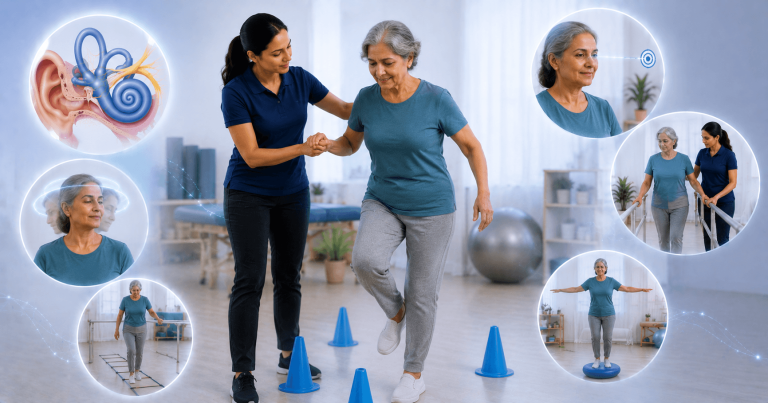
How Vestibular Physiotherapy Helps Seniors Regain Stability
Vestibular rehabilitation is a specialized physiotherapy approach designed to retrain the brain and body to work together more efficiently.
At Varia Physiotherapy Clinic’s Vestibular Rehabilitation Program, treatment begins with a detailed clinical assessment that may include:
- Balance testing
- Gait analysis
- Eye movement evaluation
- Cervical spine assessment
- Positional testing for vertigo
- Fall-risk screening
Based on the findings, physiotherapists create an individualized exercise plan rather than using generic balance exercises.
Best Vestibular Rehab Exercises for Seniors To Improve Balance Safely
The Best Vestibular Rehab Exercises for Seniors To Improve Balance are usually gentle, progressive, and carefully supervised in the beginning.
1. Gaze Stabilization Exercises
These exercises improve coordination between head and eye movements. A senior may focus on a fixed object while slowly turning the head side to side. This helps reduce dizziness during walking, shopping, or reading.
These exercises are particularly useful for:
- Vestibular hypofunction
- Post-viral dizziness
- Motion sensitivity
Patients often notice gradual improvement over several weeks rather than immediate relief.
2. Sit-to-Stand Training
Many falls happen during transitions such as standing up from a chair.
Repeated sit-to-stand practice helps:
- Strengthen leg muscles
- Improve confidence
- Enhance postural control
Physiotherapists may modify chair height and support levels depending on the patient’s strength.
3. Tandem Standing and Walking
This exercise involves placing one foot directly in front of the other.
It challenges:
- Core stability
- Ankle control
- Coordination
Initially, seniors may perform this exercise near a wall or with therapist supervision for safety.
4. Weight-Shifting Exercises
Many older adults become rigid because they fear losing balance. Controlled side-to-side and forward-backward weight shifts help retrain the body’s balance reactions and improve walking stability.
5. Walking With Head Movements
Patients walk slowly while turning their head left and right or looking up and down.
This mimics real-life activities such as:
- Crossing roads
- Looking at shelves
- Walking in crowded markets
This exercise is commonly included among the Best Vestibular Rehab Exercises for Seniors To Improve Balance because it improves dynamic stability during daily movement.
6. Habituation Exercises
Some seniors become dizzy with specific movements such as bending forward or rolling in bed. Habituation exercises involve repeated, controlled exposure to these movements so the nervous system becomes less sensitive over time. These exercises must be prescribed carefully because overdoing them may temporarily worsen symptoms.
A Real Patient Scenario Commonly Seen at Varia Physiotherapy Clinic
A 64-year-old retired teacher from Ahmedabad visited the clinic after experiencing unsteadiness for nearly eight months. She avoided evening walks because she feared falling whenever she turned her head quickly.
Her assessment revealed:
- Reduced vestibular function
- Weak lower-limb strength
- Fear-related movement avoidance
Her rehabilitation program included:
- Gaze stabilization exercises
- Balance retraining
- Strengthening exercises
- Walking drills with visual challenges
During the first two weeks, she still experienced mild dizziness during exercises. By the sixth week, she reported greater confidence while walking outdoors and climbing stairs independently.
This type of gradual improvement is common in vestibular rehabilitation. Recovery timelines vary depending on age, medical history, and consistency with exercises.
How Long Does Vestibular Rehabilitation Take?
Many patients expect dizziness to disappear within a few days. However, vestibular recovery usually requires patience.
Typical timelines may include:
- Mild cases: 2–6 weeks
- Moderate balance disorders: 6–12 weeks
- Neurological or chronic cases: Several months
Consistency matters more than intensity. Small daily improvements often lead to meaningful long-term results.
The National Institutes of Health has published research supporting vestibular rehabilitation as an evidence-based treatment for many balance disorders and dizziness conditions.
Myths vs Facts About Balance Problems in Seniors
Myth | Fact |
Dizziness is always a normal part of aging | Persistent dizziness should always be evaluated |
Bed rest helps balance disorders | Too much inactivity may worsen instability |
Balance exercises are unsafe for seniors | Properly supervised exercises are usually very safe |
Walking less prevents falls | Reduced movement often weakens balance further |
Surgery is always required | Many vestibular conditions improve with physiotherapy |
When Seniors Should See a Physiotherapist
Balance issues should not be ignored if they interfere with daily life, especially when simple activities like walking, turning, or climbing stairs start feeling unsafe. In many cases, structured senior balance rehabilitation exercises can help improve stability, confidence, and overall mobility over time.
Seek physiotherapy assessment if you experience:
- Frequent dizziness
- Feeling unsteady while walking
- Falls or near-falls
- Difficulty turning quickly
- Motion sensitivity
- Fear of walking outdoors
- Vertigo while changing positions
In some cases, physiotherapists may recommend referral to:
- Neurologists
- ENT specialists
- Orthopedic doctors
- Cardiologists
Referral becomes important if symptoms involve:
- Sudden hearing loss
- Severe headaches
- Double vision
- Stroke-like symptoms
- Progressive neurological weakness
Collaborative care improves patient safety and treatment outcomes.
Additional Physiotherapy Treatments That May Help
Depending on the underlying condition, physiotherapists may also use:
- Strength training
- Cervical spine therapy
- Posture correction
- Gait retraining
- Fall prevention education
- Functional mobility training
Patients with neck-related dizziness may also benefit from Musculoskeletal Physiotherapy Services focused on cervical mobility and posture.
Tips Seniors Can Follow at Home
Simple lifestyle adjustments can support recovery:
- Wear supportive footwear
- Improve home lighting
- Remove loose rugs
- Stay physically active
- Avoid sudden movements initially
- Stay hydrated
- Use handrails when necessary
Family support also plays an important role in helping seniors regain confidence during rehabilitation.
Conclusion
Balance problems can affect confidence, independence, and quality of life for many older adults. Fortunately, evidence-based physiotherapy can help seniors move more safely and comfortably again.
The Best Vestibular Rehab Exercises for Seniors To Improve Balance focus on retraining coordination between the brain, eyes, muscles, and inner ear through structured, progressive rehabilitation.
At Varia Physiotherapy Clinic in Ahmedabad, treatment plans are designed around each patient’s symptoms, goals, medical condition, and functional limitations. Recovery is usually gradual, but with consistency and proper guidance, many seniors regain confidence in daily movement and reduce their risk of falls.
If dizziness or instability has started affecting everyday activities, early physiotherapy assessment may help prevent symptoms from worsening.
Book a Professional Assessment
If you’re unsure whether your symptoms need attention, it’s okay to start with a simple consultation. Understanding your condition is the first step toward recovery—no pressure, just guidance.
If you’d like to speak with a physiotherapist or book an assessment at Varia Physiotherapy Clinic, you can reach out here:
 Call: +91 95123 79555
 Email: hello.drhetalvaria@gmail.com
 Website: www.variaphysiotherapyclinic.com
Our team is here to listen, assess, and guide you toward safe and effective recovery.
Vestibular Rehab Exercises For Seniors - FAQs
Are vestibular rehab exercises safe for seniors?
Can vestibular exercises completely cure dizziness?
How often should seniors perform vestibular exercises?
Can neck problems cause balance issues?
What is the best age to start vestibular rehabilitation?
About the Author

Dr. Hetal M Varia
After a rich experience of working in US healthcare as manager and licensed physiotherapist in US for last 11 years, she has returned home with a vision to become pioneer of Vestibular Therapy and specialized Parkinson physiotherapy in Ahmedabad. With her special skills and expertise in vertigo, Parkinson, balance and movement disorders therapy, Dr. Varia is committed to provide US standards of therapy services , compassionate and patient centered care to our people and community. With a vision of the world where everyone walks strong & steady, she intends to empower individuals with vestibular and neurological disorders through specialized care, rehabilitation & innovative therapies to improve mobility, balance & overall quality of life!