
How Long Does Vestibular Rehabilitation Take To Show Results?
Dizziness can quietly affect every part of daily life. Many people in Ahmedabad struggle with balance problems while walking, sudden spinning sensations during head movements, difficulty focusing visually, or fear of falling in crowded places. These symptoms often lead to reduced confidence, anxiety, and avoidance of movement.
One of the most common questions patients ask at Varia Physiotherapy Clinic is: How Long Does Vestibular Rehabilitation Take To Show Results?
The answer depends on several factors, including the underlying condition, symptom severity, age, medical history, and consistency with therapy exercises. Some patients begin noticing improvement within 2–3 weeks, while others may require several months of structured rehabilitation for lasting recovery.
Vestibular rehabilitation is not a “quick fix.” It is a scientifically designed physiotherapy approach that helps retrain the brain, inner ear, eyes, and body to work together again. With proper assessment and individualized treatment planning, many patients experience meaningful improvements in balance, dizziness control, and daily functioning.
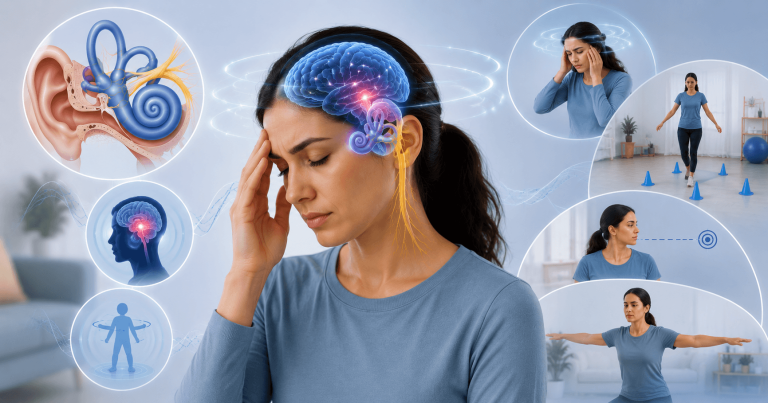
Understanding Vestibular Problems in Simple Terms
The vestibular system is located inside the inner ear and plays an important role in balance, posture, and eye coordination. When this system is affected, patients may experience:
- Vertigo (spinning sensation)
- Dizziness while turning the head
- Unsteadiness during walking
- Motion sensitivity
- Nausea
- Visual instability
- Fear of falling
At Varia Physiotherapy Clinic, many adults between 30–65 years old seek treatment for vestibular disorders after prolonged symptoms interfere with work, travel, sleep, or routine activities.
Common vestibular conditions include:
Benign Paroxysmal Positional Vertigo (BPPV)
BPPV is one of the most common causes of sudden spinning sensations during movements like turning in bed or looking upward. It happens when tiny calcium crystals inside the inner ear shift out of place, temporarily affecting balance signals sent to the brain.
Vestibular Neuritis
Vestibular neuritis usually develops after a viral infection and can cause intense dizziness, nausea, and difficulty walking steadily. Many patients feel as though the room is moving even while resting, making daily activities physically and emotionally exhausting.
Vestibular Migraine
Vestibular migraine can trigger dizziness, motion sensitivity, and balance problems even when headache pain is mild or absent. Symptoms are often influenced by stress, poor sleep, screen exposure, or certain environmental triggers.
Age-Related Balance Disorders
As the body ages, balance reactions, muscle strength, and inner ear function may gradually decline. Older adults may notice increased unsteadiness while walking, climbing stairs, or changing direction quickly, which can raise fall risk.
Post-Concussion Vestibular Dysfunction
After a head injury or concussion, some individuals continue experiencing dizziness, blurred vision during movement, and poor balance. These symptoms can affect concentration, confidence, and the ability to return comfortably to work or normal routines.
How Long Does Vestibular Rehabilitation Take To Show Results for Different Conditions?
Recovery timelines vary because every vestibular disorder behaves differently.
Mild BPPV Cases
People with mild BPPV often notice improvement relatively quickly once the inner ear crystals are repositioned correctly through physiotherapy techniques. Many patients begin feeling steadier within a few sessions, especially when exercises are performed consistently at home.
Moderate Vestibular Dysfunction
Conditions such as vestibular neuritis or vestibular migraine usually require gradual rehabilitation because the brain needs time to adapt to altered balance signals. With regular therapy and guided exercises, many patients experience better stability and reduced dizziness over several weeks.
Chronic Balance Disorders
When dizziness or imbalance has been present for months or years, recovery may take longer because the body often develops compensatory movement patterns and fear of movement. Progressive physiotherapy helps rebuild confidence, improve walking stability, and support safer daily movement over time.
Neurological Conditions
Patients with neurological conditions like Parkinson’s disease or stroke-related imbalance may need longer-term vestibular and balance rehabilitation tailored to their functional abilities. Treatment focuses on improving mobility, reducing fall risk, and helping patients maintain independence in daily life.
The National Institutes of Health emphasizes that vestibular rehabilitation can significantly improve balance and reduce dizziness when exercises are performed consistently under professional supervision.
Similarly, the World Health Organization highlights the importance of mobility preservation and fall prevention for maintaining long-term quality of life in adults and older populations.
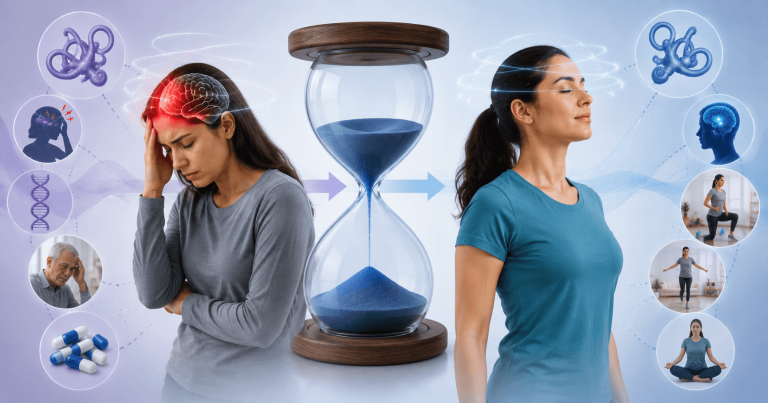
Why Recovery Timelines Differ Between Patients
At Varia Physiotherapy Clinic, two patients with similar dizziness symptoms may recover at very different speeds.
Several factors influence recovery:
Duration of Symptoms
Patients who start vestibular rehabilitation soon after symptoms begin often recover more efficiently because the brain adapts better during the early stages. Delaying treatment for several months may allow balance problems and movement avoidance patterns to become more persistent.
Consistency With Exercises
Vestibular rehabilitation works best when exercises are performed regularly and correctly. Consistent home practice helps the brain gradually improve balance control, reduce dizziness sensitivity, and build confidence during daily activities.
Anxiety and Fear of Movement
Many people naturally avoid movements that trigger dizziness, especially after repeated uncomfortable episodes. However, excessive avoidance can slow recovery because the balance system needs controlled movement exposure to adapt effectively.
Associated Neck or Neurological Problems
Conditions such as cervical stiffness, migraine disorders, diabetes, or neurological impairments may influence recovery speed and balance coordination. A detailed physiotherapy assessment helps identify these contributing factors and guide appropriate treatment planning.
Age and Physical Conditioning
Good muscle strength, posture, and overall physical activity levels can positively support vestibular recovery. Patients who maintain regular movement and physical conditioning often tolerate rehabilitation exercises more comfortably over time.
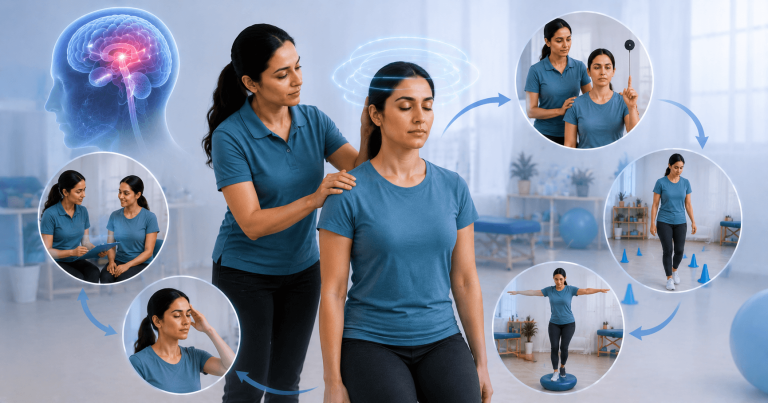
How Physiotherapy Helps Vestibular Recovery Step-by-Step
Vestibular rehabilitation is much more than “general exercise.” It is a targeted treatment program based on clinical findings and movement analysis.
At Varia Physiotherapy Clinic, vestibular physiotherapy typically involves the following stages:
1. Detailed Clinical Assessment
The physiotherapist evaluates:
- Balance reactions
- Walking pattern
- Eye movement coordination
- Neck mobility
- Positional dizziness triggers
- Fall risk
- Functional limitations
Clinical tests help identify whether symptoms are vestibular, neurological, cervical, or related to another medical issue.
If red flags appear — such as sudden hearing loss, neurological weakness, severe headaches, or unexplained symptoms — referral to a neurologist or ENT specialist may be recommended.
2. Symptom-Specific Treatment Planning
Every patient receives an individualized rehabilitation plan based on their condition.
Treatment may include:
- Canalith repositioning maneuvers
- Gaze stabilization exercises
- Balance retraining
- Walking coordination drills
- Habituation exercises
- Postural correction
- Neck mobility exercises
Patients are gradually exposed to movements that trigger dizziness in a controlled and safe manner. Over time, the brain learns to adapt and reduce symptom sensitivity.
3. Progressive Balance Training
Many patients initially feel unstable while walking outdoors, climbing stairs, or turning quickly.
Balance retraining focuses on:
- Static balance
- Dynamic walking control
- Surface adaptation
- Visual dependence reduction
- Fall prevention strategies
These exercises improve confidence and movement control in daily life.
4. Home Exercise Program
A customized home program is essential for recovery. Most patients are advised to perform exercises daily for several weeks. Missing exercises frequently can slow vestibular adaptation and prolong symptoms.
Real Patient Scenario Commonly Seen at Varia Physiotherapy Clinic
A middle-aged office professional from Ahmedabad visited the clinic after experiencing dizziness for nearly four months. The symptoms started after a viral infection and gradually worsened while walking in busy environments or using escalators.
Initially, the patient avoided travel, reduced physical activity, and became fearful of sudden head movements.
After assessment, vestibular hypofunction with balance impairment was identified. The rehabilitation program included gaze stabilization exercises, balance retraining, neck mobility correction, and progressive walking drills.
Within three weeks, the patient noticed improved confidence while walking. After approximately eight weeks of consistent therapy and home exercises, daily activities became significantly easier with reduced dizziness episodes.
This type of gradual, realistic improvement is commonly seen with evidence-based vestibular physiotherapy.
Myths vs Facts About Vestibular Rehabilitation
Myth: Dizziness always disappears immediately
Fact: Some conditions improve quickly, while others require gradual neurological adaptation over several weeks.
Myth: Rest is the best solution
Fact: Prolonged inactivity can delay vestibular recovery and worsen balance confidence.
Myth: Medication alone can solve vestibular disorders
Fact: Medications may temporarily control symptoms, but physiotherapy helps retrain balance systems for long-term improvement.
Myth: Dizziness is normal aging
Fact: Persistent dizziness should never be ignored. Proper assessment can identify treatable causes.
Myth: Exercises should stop if mild dizziness occurs
Fact: Mild symptom provocation during supervised exercises is often part of the recovery process.
When Should You See a Physiotherapist?
- Frequent dizziness
- Loss of balance
- Vertigo during head movements
- Unsteadiness while walking
- Motion sensitivity
- Recurrent falls
- Visual instability
- Difficulty focusing during movement
Early intervention often improves outcomes and helps prevent chronic balance dysfunction, while also helping patients better understand when vestibular rehabilitation starts showing results through a more structured and timely recovery process.
However, urgent medical evaluation may be necessary if dizziness is accompanied by:
- Sudden weakness
- Slurred speech
- Severe headache
- Double vision
- Chest pain
- Loss of consciousness
Final Clinical Advice
If you are struggling with dizziness or balance problems, understanding How Long Does Vestibular Rehabilitation Take To Show Results can help set realistic expectations.
Recovery is rarely instant, but structured vestibular physiotherapy can gradually improve balance, confidence, mobility, and quality of life. The key is accurate assessment, individualized treatment, and consistent exercise participation.
At Varia Physiotherapy Clinic, treatment plans are designed according to each patient’s symptoms, movement limitations, and medical history. Rather than masking symptoms temporarily, vestibular rehabilitation focuses on helping the nervous system adapt safely and effectively.
If dizziness is affecting your daily activities, early physiotherapy assessment may help prevent long-term balance complications and improve overall function.