
How To Improve Balance In Parkinson’s Disease Naturally?
Living with Parkinson’s disease can affect much more than movement alone. Many patients gradually notice walking difficulty, posture instability, reduced coordination, and fear of falling during daily movement. Simple activities like turning while walking, getting up from a chair, or climbing stairs may start feeling unsafe. At Varia Physiotherapy Clinic, many families ask the same question: How to improve balance in Parkinson’s disease naturally?
The good news is that with the right Parkinson’s physiotherapy approach, supervised exercise, and lifestyle modifications, many patients can improve walking balance, movement confidence, and functional mobility safely over time. While Parkinson’s disease is a progressive neurological condition, evidence-based neuro physiotherapy and movement rehabilitation can help patients maintain mobility independence and reduce fall risk.
According to the World Health Organization, rehabilitation plays an important role in maintaining independence and quality of life in neurological disorders. Similarly, the National Institutes of Health highlights the benefits of exercise therapy, gait training, and balance retraining in Parkinson’s rehabilitation.
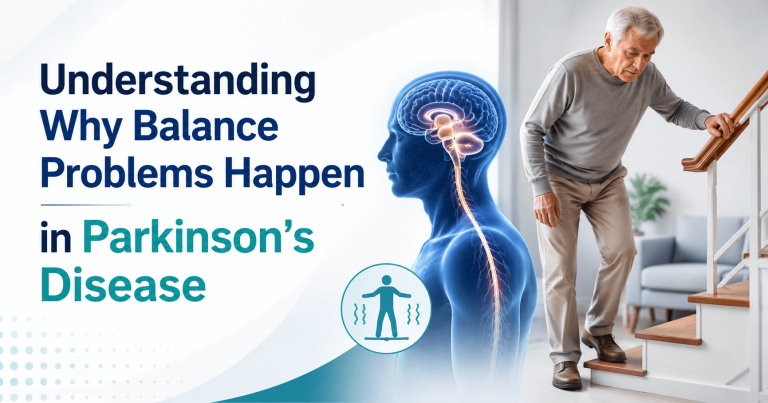
Understanding Why Balance Problems Happen in Parkinson’s Disease
Parkinson’s disease affects the nervous system disorder pathways responsible for movement control and body coordination. Over time, patients may experience:
- Shuffling gait
- Freezing of gait
- Tremors
- Muscle rigidity
- Bradykinesia (slow movement)
- Reduced reflexes
- Impaired balance
- Muscle stiffness
- Walking difficulty
- Turning instability
- Reduced movement efficiency
These motor symptoms directly affect postural stability and gait stability. Many patients develop a forward-bent posture alignment, making safe walking harder. Others experience reduced body awareness and slower balance reactions, increasing the risk of falls.
In Ahmedabad, our physiotherapists commonly see adults between 45–70 years struggling with balance management during routine activities such as bathroom transfers, kitchen work, or outdoor walking. Some avoid physical activity completely because of fear of falling, which unfortunately weakens lower body strength and worsens movement patterns further.

How To Improve Balance In Parkinson’s Disease Naturally?
Natural balance therapy does not mean avoiding medical care. Instead, it focuses on improving mobility support using therapeutic rehabilitation, guided exercise routines, and movement therapy alongside medical treatment prescribed by a neurologist.
Knee ligament injuries often cause pain, swelling, or a feeling that the knee may “give way.” Treatment depends on the ligament involved, injury severity, and your activity level, with physiotherapy playing a key role both with and without surgery.
1. Comprehensive Clinical Assessment
A detailed clinical assessment helps physiotherapists understand the patient’s balance problems, walking difficulty, posture instability, and movement patterns. At Varia Physiotherapy Clinic, therapists evaluate muscle strength, coordination, gait stability, and functional mobility before planning treatment. This personalized assessment helps create a safer and more effective rehabilitation program.
At Varia Physiotherapy Clinic, treatment begins with a detailed physical rehabilitation assessment. This may include:
- Standing balance testing
- Walking balance observation
- Functional mobility assessment
- Muscle control evaluation
- Coordination training assessment
- Safe transfers analysis
- Posture correction evaluation
- Gait rehabilitation screening
The physiotherapist also studies freezing episodes, movement flexibility, and daily exercise tolerance before creating a rehabilitation program.
2. Balance Retraining and Stability Training
Balance retraining focuses on improving postural stability, body coordination, and safer movement during daily activities. Physiotherapists use guided balance exercises, weight shifting drills, and standing balance activities to reduce fall risk. Regular stability training, combined with physiotherapy support for Parkinson’s disease in Ahmedabad, may help patients gain better movement confidence and walking control.
Balance retraining is one of the most effective approaches for Parkinson’s rehabilitation. These balance-focused exercises help retrain the brain and body to respond better during movement.
Common therapeutic exercises may include:
- Tandem standing
- Weight shifting drills
- Stepping exercises
- Standing balance activities
- Turning practice
- Walking exercises
- Equilibrium training
- Proprioception training
- Vestibular exercises
These exercises are progressed slowly to improve safer movement without overwhelming the patient.
3. Gait Training for Walking Confidence
Gait training helps Parkinson’s patients improve walking balance, reduce shuffling gait, and manage freezing episodes more effectively. Therapists use movement cues, stepping exercises, and walking practice to improve gait stability and movement efficiency. This approach supports safer walking and greater independence in daily life.
Patients with Parkinson’s often develop a shuffling gait and freezing of gait. Gait training focuses on improving movement confidence and safe walking.
Therapists may use:
- Visual movement cues
- Rhythmic stepping
- Walking assistance strategies
- Turning stability exercises
- Walking speed control
- Functional training drills
- Gait stability practice
This type of neurological rehabilitation helps patients improve walking confidence and movement coordination during daily tasks.
4. Muscle Strengthening and Core Stability
Muscle strengthening exercises help improve lower body strength, posture alignment, and overall mobility support. Core stability training is especially important for maintaining balance coordination and reducing posture instability. Regular therapeutic exercise may help patients move more safely and confidently.
Weak muscles can worsen posture instability and balance problems. Physiotherapists therefore include:
- Core strengthening
- Lower limb exercises
- Strength training
- Endurance exercises
- Stretching routine
- Posture exercises
- Mobility exercises
Improved lower body strength often supports safer transfers, posture alignment, and functional independence.
5. Home Exercise Routine and Lifestyle Support
A structured home exercise routine helps patients continue movement rehabilitation outside physiotherapy sessions. Simple mobility exercises, stretching routines, and posture correction activities support long-term balance recovery and functional independence. Lifestyle guidance also encourages safer daily movement and a more active lifestyle.
Consistency matters in Parkinson’s care. Patients are usually given a daily exercise plan including home exercises and mobility therapy routines.
This may include:
- Gentle walking exercises
- Chair exercises
- Balance coordination drills
- Flexibility exercises
- Therapeutic movements
- Breathing and posture correction exercises
Regular physical activity can help maintain movement improvement and independent mobility over time.
Read More:- Parkinson’s Mobility Exercises In Ahmedabad
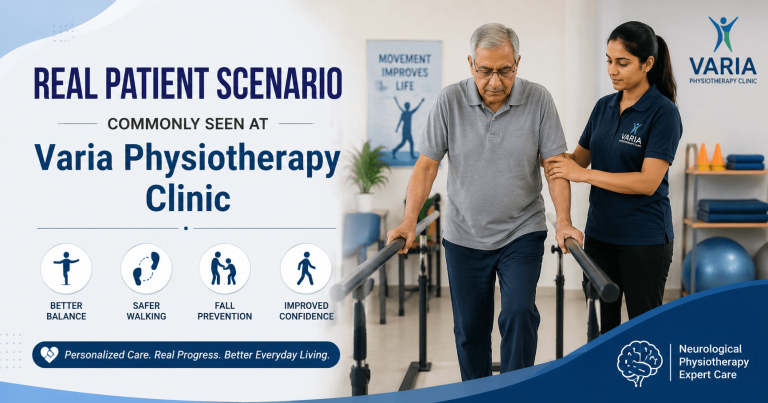
Real Patient Scenario Commonly Seen at Varia Physiotherapy Clinic
A 62-year-old gentleman from Ahmedabad visited our rehabilitation clinic after experiencing repeated imbalance while walking inside his home. His family noticed increased shuffling gait, posture instability, and freezing of gait near doorways.
Initially, he avoided outdoor activity because of fear of falling. Clinical assessment showed reduced coordination, poor standing balance, muscle rigidity, and weak lower body strength.
His Parkinson’s physiotherapy plan included:
- Balance retraining
- Gait training
- Functional mobility exercises
- Core strengthening
- Safe walking practice
- Movement rehabilitation
- Supervised exercise sessions
- Home exercise therapy
After around 8 weeks of regular physiotherapy sessions, he showed noticeable improvement in movement confidence, turning stability, and walking balance. Although Parkinson’s disease cannot be cured, structured neurological exercise helped improve his daily movement safety and mobility restoration significantly.
Common Myths vs Facts About Parkinson’s Balance Problems
| Myth | Fact |
|---|---|
| Parkinson’s only causes tremors | Parkinson’s disease also affects balance coordination and gait stability |
| Falls are unavoidable | Fall prevention strategies and balance support can reduce risk |
| Rest is better than movement | Guided physical therapy and mobility enhancement are usually beneficial |
| Walking aids create dependency | Proper walking assistance may improve safer movement |
| Exercise is unsafe in Parkinson’s | Supervised exercise and therapeutic exercise are commonly recommended |
Ligaments have limited blood supply, so they heal slowly and require controlled loading not complete rest and not aggressive exercise.
When Should You See a Physiotherapist?
You should consider consulting a physiotherapist if you notice:
- Frequent imbalance while walking
- Reduced movement control
- Difficulty turning
- Shuffling gait
- Freezing episodes
- Muscle stiffness
- Poor posture alignment
- Declining mobility independence
- Increased fall risk
- Difficulty with safe transfers
Early neurological rehabilitation often helps maintain functional mobility and movement efficiency for a longer period.
However, certain symptoms require neurologist referral immediately, including:
- Sudden worsening of motor symptoms
- Severe dizziness
- Rapid mobility decline
- Loss of consciousness
- Significant medication side effects
In some cases, orthopedic consultation may also be necessary if joint pain, fractures, or severe muscle weakness contribute to walking difficulty.
Natural Daily Tips for Better Balance in Parkinson’s Disease
Patients can support balance recovery at home with small lifestyle changes:
- Follow a consistent exercise routine
- Stay physically active safely
- Avoid cluttered walking spaces
- Use supportive footwear
- Practice posture correction daily
- Move slowly during direction changes
- Focus on body awareness while walking
- Continue supervised rehabilitation exercises
- Avoid prolonged sitting
- Maintain regular follow-up physiotherapy sessions
Small improvements in mobility care often create meaningful benefits in daily life.
Conclusion:
If you are wondering how to improve balance in Parkinson’s disease naturally, the answer often lies in early assessment, consistent neuro physiotherapy, balance-focused exercises, gait training, and structured movement rehabilitation. While Parkinson’s disease affects movement patterns and posture stability progressively, many patients can still maintain active lifestyles with proper therapeutic rehabilitation and mobility support.
At Varia Physiotherapy Clinic, treatment plans are designed around each patient’s mobility goals, physical limitations, and safety needs. Ethical, evidence-based Parkinson’s rehabilitation focuses on improving quality of life—not making unrealistic promises.
If you or your family member has started noticing impaired balance, freezing of gait, or reduced movement confidence, seeking timely physiotherapy guidance may help support safer movement and better daily independence.