
Why Do Parkinson's Patients Develop Hand Tremors?
For many people, the first visible sign of Parkinson’s disease is a slight shaking in the hand. It may begin subtly while sitting quietly, holding a cup of tea, or resting the hand on the lap. Over time, these movements become more noticeable and start interfering with daily life.
At Varia Physiotherapy Clinic in Ahmedabad, many patients arrive with similar concerns:
- “My hand shakes even when I am relaxed.”
- “I feel embarrassed while writing or eating.”
- “Is this normal aging or something serious?”
- “Can physiotherapy really help tremors?”
These concerns are valid. Hand tremors can affect confidence, independence, work performance, and emotional well-being. Simple activities like buttoning a shirt, signing documents, using a smartphone, or carrying food may suddenly feel difficult.
Understanding why Parkinson’s patients develop hand tremors helps patients and families make informed decisions about treatment and rehabilitation. Although Parkinson’s disease is progressive, early management with physiotherapy, medication, and lifestyle support can significantly improve quality of life.
At Varia Physiotherapy Clinic, our focus is not simply on treating symptoms but on helping people move more safely, confidently, and independently in their everyday lives.
Understanding Parkinson’s Disease in Simple Language
Parkinson’s disease is a neurological condition that affects the brain’s ability to control smooth movement. It develops gradually and usually worsens slowly over time.
Inside the brain, there are specialized nerve cells responsible for producing dopamine. Dopamine is a chemical messenger that helps regulate movement, coordination, and muscle control.
In Parkinson’s disease, these nerve cells gradually stop functioning properly. As dopamine levels decrease, the brain struggles to coordinate body movements effectively. This leads to symptoms such as:
- Hand tremors
- Muscle stiffness
- Slowed movement
- Poor balance
- Difficulty walking
- Reduced facial expression
- Coordination problems
According to the World Health Organization, Parkinson’s disease affects millions of people globally and is one of the most common neurological disorders affecting adults.
Although Parkinson’s is more common in older adults, symptoms may begin earlier in some individuals. Early diagnosis and rehabilitation are extremely important for maintaining long-term mobility and independence.
Why Do Parkinson's Patients Develop Hand Tremors?
One of the most common questions patients ask is:
“Why does the hand shake even when I am resting?”
The answer lies in how Parkinson’s disease affects communication between the brain and muscles.
Normally, the brain sends organized electrical signals to control smooth muscle movement. Dopamine helps regulate and fine-tune these signals.
When dopamine levels reduce:
- Brain signals become irregular
- Muscle control becomes less coordinated
- Certain muscles contract involuntarily
- Rhythmic shaking develops
This shaking is known as a tremor.
In Parkinson’s disease, tremors commonly:
- Start on one side of the body
- Affect the hands or fingers first
- Occur during rest
- Reduce temporarily during intentional movement
- Become worse during stress or fatigue
Many people notice a repetitive movement where the thumb rubs against the fingers. Doctors often call this a “pill-rolling tremor.”
At Varia Physiotherapy Clinic, we frequently see patients who initially ignore these early symptoms because they believe the shaking is caused by stress, weakness, or aging. Unfortunately, delaying assessment may allow movement problems to worsen gradually.
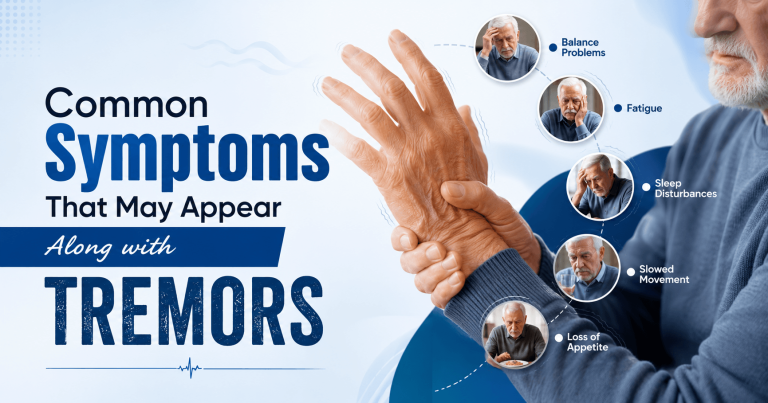
Common Symptoms That May Appear Along with Tremors
Tremors are only one part of Parkinson’s disease. Many patients also experience additional symptoms that affect posture, mobility, and daily activities.
Muscle Stiffness
Many Parkinson’s patients feel constant tightness in the neck, shoulders, back, or legs. This stiffness can make simple movements like getting out of bed, turning while walking, or standing from a chair feel slow and uncomfortable, especially when combined with the movement difficulties and tremor symptoms that explain why hand tremors happen in Parkinson’s disease.
Slowed Movements
Daily activities may start taking more time than usual because the body does not respond as quickly as before. Patients often notice slower walking, delayed hand movements, or difficulty performing routine tasks smoothly.
Reduced Arm Swing While Walking
One of the early signs of Parkinson’s disease is reduced natural arm movement during walking. Patients may notice one arm staying stiff or close to the body instead of swinging normally.
Balance Problems
Parkinson’s disease can affect coordination and body stability, making patients feel unsteady during walking or turning. Climbing stairs or walking on uneven surfaces may become more difficult and increase the risk of falls.
Fatigue
Persistent tiredness is common in Parkinson’s disease and may affect both physical and mental energy levels. Fatigue can worsen tremors, reduce concentration, and make movement more challenging throughout the day.
Changes in Handwriting
Handwriting may gradually become smaller, shaky, or cramped due to reduced muscle control and coordination. Many patients notice difficulty writing clearly or maintaining consistent letter size over time.
Importance of Early Recognition
Recognizing these symptoms early allows physiotherapists and neurologists to create a more effective treatment and rehabilitation plan. Early intervention can help improve mobility, safety, and overall quality of life.
Factors That Can Make Tremors Worse
Although Parkinson’s disease itself causes tremors, certain daily habits and conditions can increase their intensity.
Stress and Anxiety
Emotional stress and anxiety can overstimulate the nervous system, making hand tremors more noticeable. Many Parkinson’s patients observe that their shaking increases during tension, worry, or emotionally stressful situations.
Poor Sleep
Lack of proper sleep can affect brain function, muscle coordination, and energy levels. Fatigue caused by poor sleep may worsen tremors, stiffness, and overall movement control during the day.
Lack of Physical Activity
Long periods of inactivity may increase muscle stiffness and reduce flexibility in Parkinson’s patients. Regular guided movement and exercise help maintain mobility, balance, and better body coordination.
Incorrect Medication Timing
Parkinson’s medications work best when taken on schedule. Delayed or missed doses may temporarily increase tremors, stiffness, or slowness of movement, making daily activities more difficult.
Poor Posture
Forward head posture and rounded shoulders are common in Parkinson’s disease and may reduce movement efficiency. Poor posture can also increase muscular strain, fatigue, and balance difficulties over time.
Importance of Physiotherapy
At Varia Physiotherapy Clinic, physiotherapy programs focus not only on managing tremors but also on improving posture, mobility, flexibility, and overall movement quality. A personalized rehabilitation plan can help patients move more safely and confidently in daily life.
Read More : Parkinson’s Walking Therapy In Gota Ahmedabad
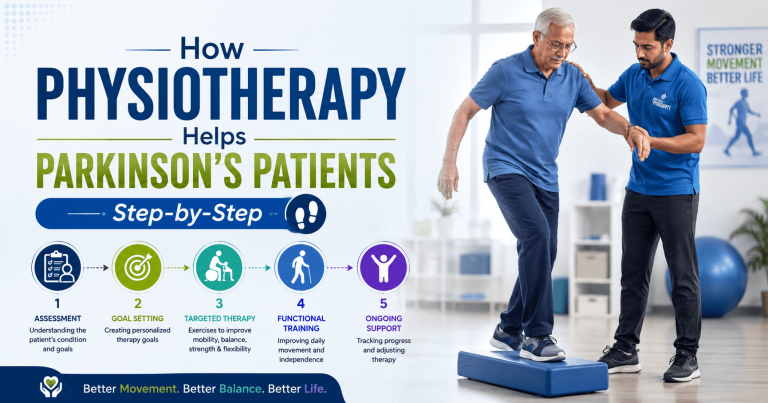
How Physiotherapy Helps Parkinson’s Patients Step-by-Step
Many people mistakenly believe physiotherapy is useful only after fractures or surgery. In reality, neurological physiotherapy plays a major role in Parkinson’s disease management.
Treatment at Varia Physiotherapy Clinic begins with detailed assessment and personalized rehabilitation planning.
Step 1: Comprehensive Physical Assessment
The physiotherapist evaluates:
- Tremor severity
- Muscle stiffness
- Walking pattern
- Balance ability
- Posture
- Joint mobility
- Functional independence
- Fall risk
Clinical assessment helps identify which symptoms are affecting daily life most significantly.
If symptoms appear unusual or rapidly progressive, referral to a neurologist may be recommended for further investigation.
Step 2: Improving Movement Coordination
Specific neurological exercises help retrain communication between the brain and muscles.
These may include:
- Hand coordination drills
- Target-reaching exercises
- Rhythmic movement training
- Controlled upper-limb activities
- Fine motor exercises
The goal is not to promise instant tremor removal but to improve functional control during daily tasks.
Step 3: Posture Correction Exercises
Many Parkinson’s patients gradually develop a stooped posture with rounded shoulders and forward head positioning.
Poor posture can:
- Reduce walking efficiency
- Affect breathing
- Increase fatigue
- Limit arm movement
- Reduce balance stability
Stretching and posture correction exercises help improve body alignment and mobility.
Step 4: Balance and Gait Training
Balance training is essential because Parkinson’s disease increases fall risk over time.
Physiotherapy sessions may include:
- Weight-shifting activities
- Turning practice
- Step training
- Walking pattern retraining
- Obstacle navigation exercises
Patients also learn safe movement strategies for home environments.
Step 5: Strength and Endurance Training
Muscle weakness and reduced physical endurance are common in Parkinson’s disease.
Strengthening exercises may focus on:
- Leg muscles
- Core stability
- Shoulder strength
- Functional movement control
Improved strength often supports safer mobility and reduces fatigue.
Step 6: Functional Independence Training
Therapy should always connect to real-life needs.
Patients practice daily activities such as:
- Getting out of bed
- Standing from a chair
- Climbing stairs
- Carrying objects safely
- Writing and hand coordination tasks
This practical approach helps patients remain independent for longer.
According to the National Institutes of Health, regular exercise and rehabilitation improve physical function and quality of life in Parkinson’s disease.
A Real Patient Experience from Varia Physiotherapy Clinic
A 61-year-old retired teacher from Ahmedabad visited Varia Physiotherapy Clinic after noticing shaking in his left hand for almost one year.
Initially, he ignored the symptoms because they appeared mild. However, over time he began experiencing:
- Difficulty writing
- Slower walking
- Shoulder stiffness
- Reduced confidence while eating in public
After neurological evaluation confirmed Parkinson’s disease, he started physiotherapy alongside medication management.
His rehabilitation program included:
- Posture correction
- Hand coordination exercises
- Balance training
- Walking practice
- Home exercise education
- Breathing exercises
Within six weeks, he reported improved walking confidence and better control during daily activities. Although his tremors did not disappear completely, he felt more independent and physically active.
This reflects an important reality: Parkinson’s disease management focuses on improving function, mobility, and quality of life rather than promising unrealistic cures.
Myths vs Facts About Parkinson’s Tremors
| Myth | Fact |
|---|---|
| Tremors always mean severe Parkinson's disease | Some patients experience mild tremors for many years |
| Hand shaking is only caused by old age | Tremors may indicate neurological conditions requiring assessment |
| Physiotherapy cannot help Parkinson's disease | Neurological physiotherapy improves mobility and daily function |
| Complete bed rest is best | Safe movement and exercise are beneficial |
| Tremors can disappear overnight | Parkinson's management usually requires long-term care |
When Should You See a Physiotherapist?
You should consider professional assessment if you notice:
- Persistent hand tremors
- Difficulty walking
- Frequent imbalance
- Slower daily movements
- Reduced coordination
- Muscle stiffness
- Fear of falling
- Difficulty with handwriting
Early rehabilitation often helps patients maintain mobility and independence longer.
However, urgent medical consultation is necessary if symptoms are sudden, rapidly worsening, or associated with:
- Severe weakness
- Confusion
- Speech difficulty
- Sudden falls
- Loss of consciousness
Lifestyle Changes That May Help Parkinson’s Patients
Stay Physically Active
Regular physical activity helps maintain flexibility, muscle strength, balance, and coordination in Parkinson’s patients. Guided exercises can also improve walking confidence and support better overall movement control.
Follow Medication Timing Carefully
Parkinson’s medications should be taken exactly as prescribed because delayed or missed doses may temporarily worsen tremors and stiffness. Maintaining a consistent schedule helps improve symptom management throughout the day.
Maintain Good Sleep Habits
Proper sleep allows the brain and nervous system to function more effectively. Good sleep habits may help reduce fatigue, improve concentration, and support better physical coordination.
Reduce Stress Levels
Stress and anxiety can increase nervous system activity and make tremors more noticeable. Relaxation techniques, breathing exercises, and a calm daily routine may help manage symptoms more effectively.
Continue Regular Physiotherapy
Consistent physiotherapy sessions are often more effective than irregular treatment. Regular rehabilitation helps improve posture, mobility, balance, and functional independence over time.
Red Flags That Need Immediate Medical Attention
Seek urgent evaluation if you experience:
- Severe swelling within hours of injury
- Inability to bear weight
- Joint deformity
- Numbness or tingling
- Repeated joint “giving way”
These signs may indicate serious structural damage.
Conclusion
Understanding why Parkinson’s patients develop hand tremors helps reduce fear and encourages early treatment. Tremors develop because Parkinson’s disease affects the brain’s dopamine-producing systems, leading to abnormal muscle signaling and involuntary shaking.
Although Parkinson’s disease is progressive, physiotherapy can play a valuable role in improving movement quality, posture, balance, coordination, and daily functioning.
At Varia Physiotherapy Clinic in Ahmedabad, rehabilitation programs are designed around each patient’s symptoms, goals, and lifestyle needs. With timely assessment, regular physiotherapy, proper medical guidance, and long-term support, many patients continue to live active and independent lives.
If you or a loved one has started noticing tremors, stiffness, or movement difficulties, seeking early professional guidance may help improve safety, mobility, and overall quality of life.
Ethical Call-to-Action
If you’re unsure whether your symptoms need attention, it’s okay to start with a simple consultation. Understanding your condition is the first step toward recovery—no pressure, just guidance.
If you’d like to speak with a physiotherapist or book an assessment at Varia Physiotherapy Clinic, you can reach out here:
 Call: +91 95123 79555
 Email: hello.drhetalvaria@gmail.com
 Website: www.variaphysiotherapyclinic.com
Our team is here to listen, assess, and guide you toward safe and effective recovery.