
Lifestyle Changes For Vertigo Patients | Reduce Dizziness Naturally
Vertigo can make even simple daily activities feel exhausting. Many people describe it as a spinning sensation, imbalance, or sudden dizziness that affects walking, working, driving, or even turning in bed. At Varia Physiotherapy Clinic in Ahmedabad, we regularly meet patients who feel anxious and frustrated because their symptoms interfere with their independence and confidence.
For adults between 30 and 65 years of age, vertigo often impacts professional responsibilities, family life, and mobility. The good news is that along with proper medical evaluation and physiotherapy, certain lifestyle changes for vertigo patients can significantly reduce symptom frequency and improve balance over time.
This article explains practical and evidence-based strategies commonly recommended by physiotherapists, along with real clinical experiences from patients visiting our clinic.

Understanding Vertigo in Simple Terms
Vertigo is not a disease itself. It is usually a symptom caused by problems related to the inner ear, balance system, neck dysfunction, neurological conditions, or reduced vestibular function.
People often describe vertigo as:
- A spinning sensation
- Feeling pulled to one side
- Sudden imbalance while walking
- Nausea or vomiting
- Dizziness when changing head position
- Difficulty focusing visually
Common causes include:
1. Benign Paroxysmal Positional Vertigo (BPPV)
BPPV is one of the most common causes of vertigo, especially in adults over 40. It happens when tiny calcium crystals inside the inner ear shift out of place and affect balance signals. People often experience sudden spinning sensations while turning in bed, bending, or looking upward. Symptoms are usually brief but can strongly affect daily confidence and movement.
2. Vestibular Disorders
Vestibular disorders affect the inner ear and the body’s balance system. These conditions can make people feel dizzy, unsteady, or sensitive to head movements. Some individuals may also experience nausea, blurred vision, or difficulty walking. Proper assessment and vestibular rehabilitation can often help improve balance and stability.
3. Cervical Vertigo
Cervical vertigo is associated with neck stiffness, poor posture, or cervical spine dysfunction. It commonly occurs in people who spend long hours working on computers or mobile devices. Along with dizziness, patients may experience neck pain, headaches, or restricted neck movement. Physiotherapy often focuses on posture correction and neck mobility improvement.
4. Neurological Conditions
Certain neurological conditions can cause dizziness, imbalance, or coordination problems. Symptoms may sometimes occur along with weakness, speech difficulty, numbness, or visual changes. These cases require careful medical evaluation to identify the underlying cause. Referral to a neurologist may be necessary when symptoms appear serious or persistent.
According to the World Health Organization, balance disorders and falls are a significant concern in adults because they affect mobility, confidence, and quality of life.

Why Lifestyle Changes for Vertigo Patients Matter
Many patients expect medicines alone to completely solve dizziness. However, recovery from vertigo usually involves improving how the brain and body adapt to balance disturbances.
Appropriate lifestyle habits can help by:
- Reducing triggers
- Improving vestibular adaptation
- Supporting nervous system recovery
- Preventing falls
- Reducing neck strain
- Improving sleep and stress management
At Varia Physiotherapy Clinic, physiotherapists often combine vestibular rehabilitation with personalized daily activity guidance to help patients regain confidence safely.
Lifestyle Changes for Vertigo Patients That May Improve Recovery
Maintain Regular Sleep Patterns
Poor sleep can worsen dizziness and fatigue. Many patients notice increased symptoms after late nights or irregular sleep schedules.
Helpful strategies include:
- Sleeping at consistent times
- Limiting screen exposure before bed
- Avoiding heavy meals late at night
- Using proper neck support while sleeping
Patients with cervical stiffness often benefit from ergonomic pillow recommendations during physiotherapy sessions.
Stay Hydrated Throughout the Day
Proper hydration plays an important role in maintaining balance and reducing dizziness symptoms. Dehydration can worsen fatigue, headaches, and lightheadedness in vertigo patients. Drinking enough water throughout the day helps support healthy circulation and inner ear function. Limiting excessive caffeine and alcohol may also help reduce vertigo triggers in some individuals.
Simple habits include:
- Drinking water regularly
- Reducing excessive caffeine intake
- Avoiding long gaps without fluids
- Limiting alcohol consumption
Some patients unknowingly reduce water intake because nausea makes them uncomfortable, but this can worsen symptoms.
Avoid Sudden Head Movements Initially
Sudden head movements can trigger spinning sensations and imbalance in people experiencing vertigo. During the early recovery phase, moving slowly while getting out of bed, turning, or bending can help reduce dizziness episodes. Controlled and gradual movement is usually safer than complete inactivity. Physiotherapists often guide patients on safe movement strategies during rehabilitation.
During acute vertigo episodes, sudden movements may trigger spinning sensations.
Physiotherapists usually advise:
- Turning slowly while getting out of bed
- Sitting briefly before standing
- Avoiding rapid neck rotation
- Using support during severe imbalance
However, complete bed rest is generally not recommended for prolonged periods because controlled movement helps vestibular adaptation.
Improve Posture and Neck Mobility
Many office workers in Ahmedabad spend long hours using laptops or mobile phones. Poor posture can increase cervical muscle tension and contribute to dizziness in some individuals.
Physiotherapy may include:
- Cervical mobility exercises
- Postural correction
- Deep neck muscle strengthening
- Ergonomic advice for workstations
You can also explore vestibular and cervical rehabilitation services through Varia Physiotherapy Clinic’s treatment programs.
Manage Stress and Anxiety
Vertigo symptoms often create fear and uncertainty. Some patients avoid walking independently or traveling because they fear another episode.
Stress can worsen dizziness perception and muscle tension.
Recommended strategies include:
- Breathing exercises
- Light walking
- Meditation
- Relaxation techniques
- Gradual exposure to movement under professional supervision
The National Institutes of Health has also discussed the relationship between vestibular dysfunction and anxiety symptoms.
Create a Safer Home Environment
Falls are a major concern in adults with dizziness.
Helpful modifications include:
- Removing loose rugs
- Using night lights
- Installing bathroom support rails if necessary
- Keeping frequently used items easily accessible
- Wearing stable footwear indoors
These small adjustments can reduce injury risk during recovery.
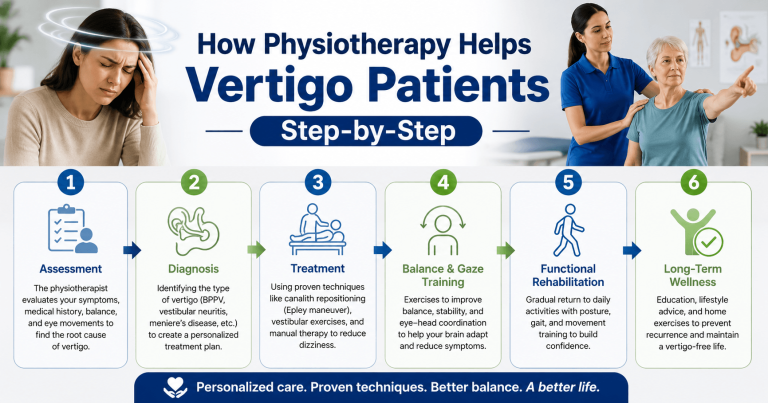
How Physiotherapy Helps Vertigo Patients Step-by-Step
At Varia Physiotherapy Clinic, treatment starts with a detailed assessment rather than immediate exercise prescription.
Step 1: Clinical Assessment
Physiotherapists evaluate:
- Balance and gait
- Eye movement coordination
- Cervical spine mobility
- Vestibular function
- Triggering positions
- Fall risk factors
If symptoms suggest neurological involvement or serious medical conditions, referral to an orthopedic specialist, ENT doctor, or neurologist may be recommended.
Step 2: Identifying the Source of Vertigo
Different causes require different treatment approaches.
For example:
- BPPV may require repositioning maneuvers
- Cervical dizziness may respond to neck rehabilitation
- Vestibular hypofunction may require gaze stabilization exercises
Treatment plans are individualized based on patient findings.0
Step 3: Vestibular Rehabilitation Exercises
Vestibular rehabilitation is an evidence-based physiotherapy approach designed to retrain the balance system.
Exercises may include:
- Eye-head coordination exercises
- Balance retraining
- Walking drills
- Positional adaptation exercises
- Gaze stabilization
Recovery usually happens gradually over several weeks rather than instantly.
Step 4: Functional Confidence Training
Many patients become fearful of movement after repeated dizziness episodes.
Physiotherapists gradually help patients return to:
- Walking independently
- Stair climbing
- Traveling
- Work activities
- Daily household routines
This stage is important for long-term confidence and independence.
A Real Patient Scenario from Varia Physiotherapy Clinic
A 48-year-old office professional visited our clinic after experiencing dizziness for nearly three months. She reported spinning sensations while turning in bed and difficulty concentrating during work meetings.
Initially, she avoided movement because she feared falling. Clinical assessment suggested positional vertigo combined with cervical stiffness from prolonged desk work.
Her treatment plan included:
- Vestibular repositioning techniques
- Neck mobility exercises
- Postural correction
- Balance retraining
- Home activity modification
Within two weeks, her spinning episodes reduced significantly. Over the next month, she gradually resumed regular office activities and walking outdoors confidently.
Like many patients, her improvement was gradual and required consistency with exercises and lifestyle modifications.
Myths vs Facts About Vertigo
| Myth | Fact |
|---|---|
| Vertigo always means a brain problem | Many cases are related to inner ear or cervical dysfunction |
| Complete bed rest is best | Controlled movement often supports recovery |
| Physiotherapy cannot help vertigo | Vestibular rehabilitation is evidence-based |
| Recovery should happen immediately | Improvement is usually gradual |
| Neck pain and dizziness are unrelated | Cervical dysfunction may contribute in some cases |
When Should You See a Physiotherapist?
You should consider professional assessment if you experience:
- Recurrent dizziness
- Spinning sensation while changing positions
- Balance problems while walking
- Neck pain associated with dizziness
- Fear of falling
- Difficulty performing daily activities
However, urgent medical attention may be necessary if dizziness is associated with:
- Sudden weakness
- Speech difficulty
- Severe headache
- Double vision
- Loss of consciousness
- Chest pain
These symptoms may indicate more serious medical conditions requiring immediate evaluation.
Ethical Call-To-Action
If you’re unsure whether your symptoms need attention, it’s okay to start with a simple consultation. Understanding your condition is the first step toward recovery—no pressure, just guidance.
If you’d like to speak with a physiotherapist or book an assessment at Varia Physiotherapy Clinic, you can reach out here:
 Call: +91 95123 79555
 Email: hello.drhetalvaria@gmail.com
 Website: www.variaphysiotherapyclinic.com
Our team is here to listen, assess, and guide you toward safe and effective recovery.
Conclusion:
Living with vertigo can feel physically and emotionally draining, especially when symptoms affect confidence and daily independence. Fortunately, evidence-based rehabilitation combined with practical lifestyle changes for vertigo patients can support meaningful recovery and better long-term balance.
At Varia Physiotherapy Clinic, treatment focuses on careful assessment, personalized rehabilitation, and helping patients safely return to normal life activities. Recovery is usually gradual, but with proper guidance, many patients experience improved balance, reduced dizziness episodes, and greater confidence in daily movement.
If dizziness or imbalance is affecting your quality of life, seeking professional evaluation early may help prevent worsening symptoms and reduce fall risk.