
Vertigo After Viral Infection: Recovery Time & Treatment
Recovering from a viral illness should feel like a return to normal life—but for many adults in Ahmedabad, the story doesn’t end there. Instead, they continue to experience dizziness, imbalance, or a strange spinning sensation that disrupts daily activities. At Varia Physiotherapy Clinic, this is something we see frequently, and one of the most common concerns patients express is about vertigo after viral infection recovery time.
You may feel fine otherwise—your fever is gone, your energy is returning—but the lingering dizziness can be frustrating and even frightening. Simple tasks like walking, working at a desk, or turning your head can suddenly feel unstable. Many patients wonder, “Why do I feel dizzy after a viral fever?” or “How long will this last?”
This blog is designed to give you clear, medically accurate answers based on real clinical experience. We’ll walk you through causes, symptoms, realistic recovery timelines, and how physiotherapy for viral vertigo can help you regain balance and confidence safely.
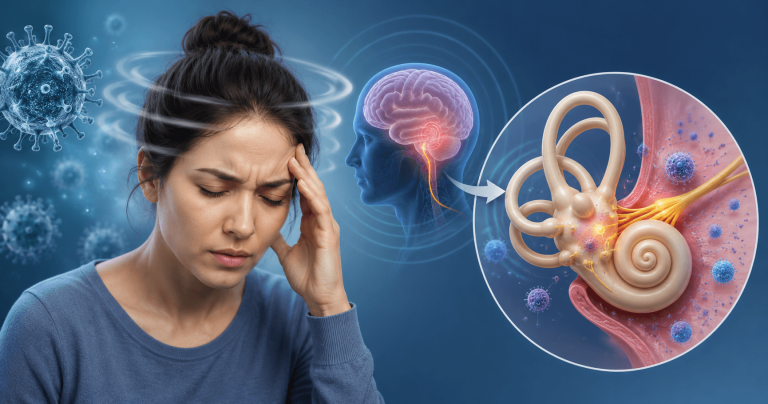
What Causes Vertigo After Viral Infection?
Vertigo after a viral illness is usually linked to the inner ear, which plays a critical role in maintaining balance. When a virus affects this area, it can lead to conditions like vestibular neuritis or labyrinthitis, both of which are forms of a vestibular system disorder.
These conditions result in inner ear inflammation, disrupting the signals sent to your brain about body position and movement. This mismatch causes symptoms like dizziness, spinning, and imbalance.
Common Causes Include:
- Vestibular neuritis recovery phase (inflammation of the vestibular nerve)
- Labyrinthitis recovery time (involvement of both balance and hearing structures)
- Inner ear infection vertigo due to viral spread
- Post-viral fatigue affecting neurological coordination
- The ear virus and dizziness connection, where even mild infections can trigger balance issues
Patients often describe a spinning sensation after cold or flu, which can appear suddenly or develop gradually over a few days. This is commonly referred to as vertigo after viral infection.

Vertigo After Viral Infection Recovery Time: What to Expect
Understanding the vertigo after viral infection recovery time is crucial for setting realistic expectations and reducing anxiety.
Typical Recovery Timeline:
- Mild cases: 1–2 weeks
- Moderate cases: 3–6 weeks
- Severe cases (vestibular neuritis): 6–12 weeks
This is often referred to as post viral vertigo recovery time or the recovery timeline for vestibular neuritis.
Many patients ask:
“How long does vertigo last after a viral infection?”
“Can vertigo last weeks after infection?”
The answer is yes—especially if the vestibular system needs time to recalibrate. However, with early intervention such as balance rehabilitation therapy, recovery can be significantly faster and more complete.
According to the World Health Organization, post-viral neurological symptoms can persist temporarily, especially when the nervous system is involved.
Common Symptoms Patients Experience
At Varia Physiotherapy Clinic, we commonly see patients experiencing:
- Persistent dizziness after flu or fever
- Sudden or ongoing spinning sensation
- Balance problems after infection
- Nausea and vomiting
- Motion sensitivity after infection (difficulty with travel or quick movements)
- Head heaviness or unsteadiness
- Difficulty focusing or walking straight
These symptoms are collectively known as viral vertigo symptoms and may vary in intensity depending on the individual.

How Physiotherapy Helps (Step-by-Step Treatment)
Many people believe rest is enough—but in reality, structured movement-based therapy is essential. At Varia Physiotherapy Clinic, we follow a personalized and evidence-based approach to viral infection dizziness treatment.
Step 1: Detailed Clinical Assessment
We begin with a thorough evaluation to understand the root cause: We start with a detailed clinical assessment of balance, eye movement, and neck function. This helps us identify whether vertigo is related to the inner ear, cervical spine, or post-viral changes.
- Balance and gait analysis
- Eye-head coordination testing
- Cervical spine assessment
- Identification of positional triggers
This helps us distinguish between vestibular causes and other conditions.
Step 2: Symptom Management
In the early phase, we focus on reducing discomfort: In the initial stage, our priority is to ease dizziness, nausea, and instability. We guide patients with safe movements, breathing strategies, and posture advice to reduce symptom intensity.
- Guidance on hydration and rest for recovery
- Advice on safe movements
- Coordination with doctors for medications for vertigo relief if needed
Step 3: Vestibular Rehabilitation Exercises
This is the cornerstone of recovery. These vestibular rehabilitation exercises include: Vestibular rehabilitation forms the main part of treatment, focusing on retraining the brain and balance system. It includes gaze stabilization, head movement control, and balance retraining exercises.
- Gaze stabilization techniques
- Head movement exercises
- Habituation exercises to reduce dizziness
- Controlled exposure to movement
These are essential exercises for post viral vertigo recovery.
Step 4: Manual Therapy & Repositioning Techniques
If positional vertigo is present, we use:For patients with positional dizziness, specific repositioning techniques like the Epley maneuver are used. These help in correcting inner ear crystal displacement and quickly reducing spinning sensations.
- Epley maneuver for dizziness
- Gentle neck mobilization
- Muscle relaxation techniques
Step 5: Balance & Functional Training
As recovery progresses: In later stages, we focus on rebuilding strength, coordination, and confidence in movement. Patients are gradually returned to normal activities through structured balance and functional training.
- Balance training for vertigo
- Walking and coordination exercises
- Return-to-work activity planning
This step ensures long-term recovery and prevents recurrence.
Research supported by the National Institutes of Health shows that vestibular rehabilitation significantly improves outcomes in patients with post-viral dizziness.
Real Patient Scenario
A 48-year-old businessman visited our clinic after recovering from a viral fever. Although his fever subsided, he continued to experience severe nausea and dizziness after illness, especially while walking or turning his head.
He initially assumed it would resolve on its own. However, after three weeks with no improvement, he became anxious and avoided going out.
Clinical Findings:
- Post viral vertigo with vestibular imbalance
- Reduced gaze stability
- Mild cervical stiffness
Treatment Plan:
- Vestibular rehabilitation exercises
- Balance retraining
- Posture correction for dizziness
Outcome:
Within 5 weeks:
- Dizziness reduced significantly
- Confidence in walking improved
- Returned to normal work routine
This is a typical example of how timely physiotherapy for viral vertigo can change recovery outcomes.
Myths vs Facts About Post Viral Vertigo
| Myth | Fact |
|---|---|
| It’s just weakness after illness | It’s often a vestibular issue requiring treatment |
| Only elderly people get vertigo | Common in working adults (30–65 years) |
| Bed rest is enough | Movement-based therapy is essential |
| Medication alone will cure it | Rehab therapy is key for full recovery |
When Should You See a Physiotherapist or Specialist?
Vertigo lasts more than 1–2 weeks
If dizziness or spinning sensations continue beyond 1–2 weeks, it may indicate an underlying vestibular issue. At this stage, a proper clinical assessment is important to avoid prolonged discomfort.
You experience severe imbalance or falls
Frequent imbalance or episodes of falling suggest that the balance system is significantly affected. This increases injury risk and requires immediate physiotherapy or specialist evaluation.
Symptoms interfere with work or daily life
When vertigo affects your ability to concentrate, walk, or perform routine tasks, it should not be ignored. Early treatment can help restore functional independence and confidence.
You notice hearing loss or ringing in the ear
Hearing changes such as ringing (tinnitus) or reduced hearing may indicate inner ear involvement. This needs timely medical evaluation along with vestibular assessment.
There is no improvement with rest
If symptoms persist despite adequate rest and home care, it suggests that passive recovery is not enough. Structured vestibular rehabilitation is usually required for improvement.
In some cases, referral to a neurologist or ENT specialist may be necessary to rule out other conditions.
Home Care Tips for Faster Recovery
While professional care is important, these simple steps can support recovery:
- Stay hydrated
- Avoid sudden head movements
- Practice prescribed exercises regularly
- Maintain proper posture
- Get adequate sleep
Patients often ask: “How to treat post viral vertigo naturally?”
The answer lies in combining lifestyle care with guided rehabilitation.
Conclusion
Dealing with dizziness after an illness can feel confusing and overwhelming, but understanding vertigo after viral infection recovery time helps you take the right steps toward recovery.
While symptoms like imbalance, nausea, and spinning sensations may persist for weeks, they are treatable with the right care. At Varia Physiotherapy Clinic in Ahmedabad, we focus on personalized, evidence-based treatment that supports safe and steady recovery.
If you’re experiencing ongoing dizziness, don’t ignore it or wait too long. Early intervention through physiotherapy for vertigo Ahmedabad can help you regain stability, confidence, and quality of life.
Ethical Call-to-Action
If you’re unsure whether your symptoms need attention, it’s okay to start with a simple consultation. Understanding your condition is the first step toward recovery—no pressure, just guidance.
If you’d like to speak with a physiotherapist or book an assessment at Varia Physiotherapy Clinic, you can reach out here:
 Call: +91 95123 79555
 Email: hello.drhetalvaria@gmail.com
 Website: www.variaphysiotherapyclinic.com
Our team is here to listen, assess, and guide you toward safe and effective recovery.
Vertigo After Viral Infection Recovery Time - FAQs
Ans: It is usually caused by inflammation of the inner ear or vestibular nerve.
Ans: It can last from a few days to several weeks depending on severity.
Ans: Most cases are manageable, but persistent symptoms require treatment.
Ans: Early physiotherapy and balance rehabilitation therapy are most effective.
Ans: Yes, if untreated—but proper rehabilitation prevents long-term issues.
About the Author

Dr. Hetal M Varia
After a rich experience of working in US healthcare as manager and licensed physiotherapist in US for last 11 years, she has returned home with a vision to become pioneer of Vestibular Therapy and specialized Parkinson physiotherapy in Ahmedabad. With her special skills and expertise in vertigo, Parkinson, balance and movement disorders therapy, Dr. Varia is committed to provide US standards of therapy services , compassionate and patient centered care to our people and community. With a vision of the world where everyone walks strong & steady, she intends to empower individuals with vestibular and neurological disorders through specialized care, rehabilitation & innovative therapies to improve mobility, balance & overall quality of life!