
Imbalance Problem In Elderly: Causes & Treatment Guide
One of the most distressing concerns we see at Varia Physiotherapy Clinic in Ahmedabad is older adults struggling with imbalance in daily life. It often begins subtly—feeling slightly unsteady while walking, difficulty turning quickly, or occasional dizziness while standing up. Over time, these symptoms may progress into a loss of balance in old age, increasing the risk of falls and reducing independence.
For many families, this becomes emotionally challenging. Seniors begin to avoid walking outdoors, fear stairs, or rely heavily on support. This condition is medically known as a balance disorder in elderly, and it is far more common than most people realize.
The good news is that with structured rehabilitation, most patients can regain stability and confidence. Physiotherapy plays a key role in restoring safe movement and preventing falls.
What Is Balance Disorder In Elderly?
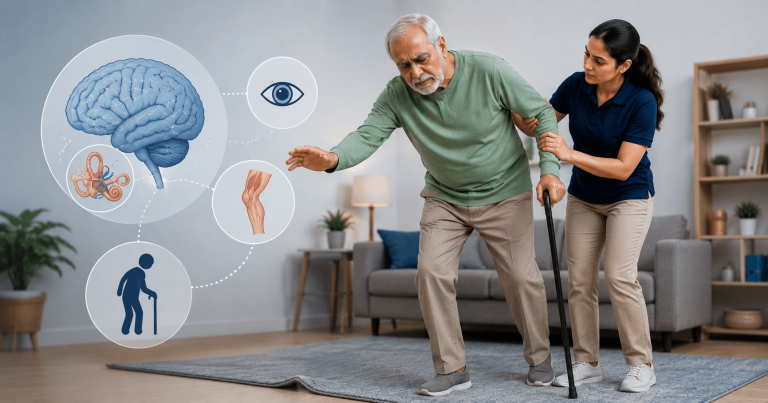
Balance is not controlled by a single system. It is a coordination between:
- Inner ear (vestibular system)
- Eyes (vision)
- Muscles and joints
- Brain and nervous system
With aging, one or more of these systems may weaken, leading to age-related balance decline.
This is why many seniors experience:
- Gait instability in elderly
- Unsteady walking in seniors
- Difficulty adjusting posture while moving
- Increased fall risk in elderly people
Even small disruptions in coordination can lead to major mobility challenges in older adults.
Common Causes of Imbalance In Older Adults
In clinical practice, imbalance rarely has a single cause. It is usually a combination of factors:
1. Inner Ear Problems in Elderly
The inner ear helps control balance, and even small disturbances can cause spinning sensations or unsteadiness. Many older adults experience this as vestibular dysfunction in seniors, making walking or turning feel unstable. With proper assessment and vestibular rehabilitation, most patients show noticeable improvement.
2. Cervical Spondylosis Dizziness
Age-related wear and tear in the neck can affect nerves and blood flow, leading to dizziness and imbalance. Patients often describe it as “lightheadedness with neck stiffness.” Evidence-based physiotherapy focusing on neck mobility and posture correction can significantly reduce symptoms.
3. Muscle Weakness in Old Age
Reduced strength in leg and core muscles directly impacts stability during standing and walking. This increases the risk of gait instability in elderly and falls. Targeted strengthening exercises under physiotherapy guidance can restore confidence and mobility.
4. Neuropathy and Balance Issues
Nerve damage, commonly seen in diabetes, reduces sensation in the feet, making it harder to feel the ground properly. This leads to unsteady walking in seniors and higher fall risk. Sensory retraining and balance exercises are key parts of rehabilitation.
5. Blood Pressure Fluctuation Dizziness
Sudden drops in blood pressure, especially while standing, can cause dizziness or fainting sensations. This condition is common in older adults and may be linked to dehydration or medications. Medical review and guided lifestyle adjustments help manage symptoms safely.
6. Medication Side Effects Imbalance
Some medications used for blood pressure, anxiety, or sleep may affect the brain’s balance system. Patients may feel lightheaded or unsteady without realizing the cause. A doctor’s review of prescriptions is important to rule out medication-related imbalance.
7. Vitamin B12 Deficiency Balance Problems
Low vitamin B12 levels can affect nerve function, leading to poor coordination and tingling in the legs. Over time, this may contribute to balance issues after 60. Early diagnosis and supplementation can significantly improve neurological health.
8. Vision Problems and Coordination Issues
Reduced vision makes it harder for the brain to judge distance and movement accurately. This increases fall risk in elderly people, especially in low-light environments. Regular eye check-ups and environmental adjustments help improve safety.
9. Neurological Causes of Imbalance
Conditions such as stroke, Parkinson’s disease, or other neurological disorders can affect coordination and posture control. Patients may experience persistent coordination problems in aging adults. A multidisciplinary approach involving physiotherapy and neurology is essential for management.
Warning Signs You Should Not Ignore
If you notice the following symptoms, it is important to seek evaluation:
- Frequent unsteady walking in seniors
- Sudden dizziness while standing or turning
- Repeated near-falls
- Fear of walking alone
- Difficulty climbing stairs
- General instability in daily movement
These are strong indicators of fall risk in elderly people.
How Physiotherapy Helps (Step-by-Step Treatment Approach)
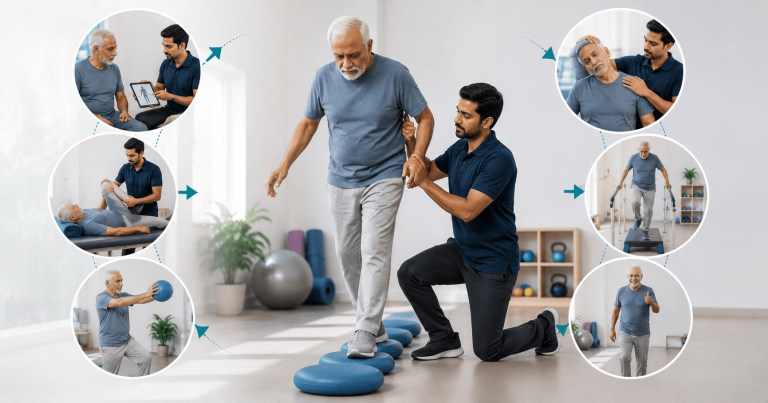
At Varia Physiotherapy Clinic, we follow a structured, evidence-based approach:
Step 1: Clinical Assessment
Every patient begins with a detailed evaluation where we carefully observe posture, walking pattern (gait), muscle strength, balance reactions, and neurological coordination. This helps us understand whether the issue is related to muscles, nerves, inner ear function, or a combination of factors.
Step 2: Physiotherapy for Balance Improvement
Based on the assessment, a personalized treatment plan is created. Since every case of imbalance is different, therapy is tailored to address the specific cause rather than using a one-size-fits-all approach.
Step 3: Vestibular Rehabilitation Therapy
For patients with inner ear-related dizziness, we use specialized vestibular rehabilitation therapy. These guided exercises help the brain gradually adapt and compensate for balance disturbances, reducing spinning sensations and instability.
Step 4: Gait Training for Elderly Patients
We focus on improving walking mechanics by correcting step length, posture during movement, and weight shifting. This helps reduce gait instability in elderly patients and improves walking confidence in daily life.
Step 5: Strengthening Exercises for Elderly Legs
Weak muscles are one of the most common reasons for imbalance. Targeted strengthening of the legs, hips, and core improves stability, making standing and walking safer and more controlled.
Step 6: Posture Correction Therapy
Poor posture can affect the entire balance system. Through gentle correction techniques, we improve spinal alignment, reduce strain on muscles, and enhance overall stability and body control.
Step 7: Balance Training Exercises for Seniors
We gradually introduce structured balance exercises that challenge coordination and reaction time. These exercises are carefully progressed to match the patient’s safety and ability level.
Step 8: Fall Prevention Exercises at Home
Patients are guided with simple and safe home-based routines to reduce fall risk in elderly people. These exercises help maintain progress between therapy sessions and build long-term confidence.
Step 9: Walking Support Therapy for Elderly
For patients who depend on support while walking, we provide step-by-step training to improve independence. The goal is to gradually reduce reliance on assistance and restore natural walking ability.
Step 10: Rehabilitation for Dizziness and Imbalance
This is a comprehensive recovery phase focusing on restoring functional independence. It combines physical training, balance retraining, and lifestyle guidance to improve safety, mobility, and quality of life.
These rehabilitation principles are supported by global health authorities, including the World Health Organization (WHO) and the National Institutes of Health (NIH), which emphasize structured balance training and fall prevention strategies for older adults as an effective approach to reducing fall risk and improving mobility outcomes.
Real Patient Experience (Ahmedabad Case Example)
A 68-year-old retired teacher visited our clinic with frequent imbalance and fear of falling. He had stopped walking outdoors due to repeated episodes of dizziness and instability.
After assessment, we identified multiple contributing factors:
- Muscle weakness
- Mild cervical spondylosis dizziness
- Reduced vestibular response
A structured program including balance training exercises for seniors, gait correction, and strengthening was started.
Within 6–8 weeks, he reported:
- Improved walking confidence
- Reduced dizziness episodes
- Ability to walk independently in his neighborhood
This is a common outcome when rehabilitation is consistent and guided.
Myths vs Facts
Myth: Imbalance is a normal part of aging
Fact: It is treatable with proper rehabilitation
Myth: Rest is the best solution
Fact: Controlled movement and therapy improve recovery
Myth: Only medication can help dizziness
Fact: Physiotherapy plays a major role in stability improvement
When Should You See a Physiotherapist?
Seek help if:
- Imbalance persists for more than 2 weeks
- You experience repeated falls
- Dizziness affects daily life
- Walking confidence is decreasing
- You are above 60 with progressive instability
In some cases, referral to a neurologist or orthopedic specialist may be necessary for further evaluation.
Prevention & Lifestyle Tips
- Practice how to prevent falls in elderly strategies at home
- Improve lighting and remove tripping hazards
- Use assistive devices for balance support if needed
- Engage in senior fitness and coordination exercises
- Focus on elderly mobility improvement through regular activity
- Maintain hydration and nutrition for nerve health
- Practice safe walking tips for seniors daily
Conclusion
Imbalance problems in elderly individuals are not something to ignore or accept as “normal aging.” With timely intervention, structured rehabilitation, and guided physiotherapy, most patients can regain independence and confidence in movement.
At Varia Physiotherapy Clinic, Ahmedabad, our focus is not just symptom relief but restoring safe mobility and preventing future falls through personalized care.
If you or your loved one is experiencing balance issues, early evaluation can make a significant difference.
Ethical Call-to-Action
If you’re unsure whether your symptoms need attention, it’s okay to start with a simple consultation. Understanding your condition is the first step toward recovery—no pressure, just guidance.
If you’d like to speak with a physiotherapist or book an assessment at Varia Physiotherapy Clinic, you can reach out here:
 Call: +91 95123 79555
 Email: hello.drhetalvaria@gmail.com
 Website: www.variaphysiotherapyclinic.com
Our team is here to listen, assess, and guide you toward safe and effective recovery.
Imbalance Problem In Elderly - FAQs
Yes, most cases improve significantly with physiotherapy and lifestyle changes.
Mild cases improve in 4–6 weeks; complex neurological cases may take longer.
Yes, especially through vestibular rehabilitation therapy.
Balance training, leg strengthening, and gait training exercises.
If falls or dizziness are frequent or worsening.
About the Author

Dr. Hetal M Varia
After a rich experience of working in US healthcare as manager and licensed physiotherapist in US for last 11 years, she has returned home with a vision to become pioneer of Vestibular Therapy and specialized Parkinson physiotherapy in Ahmedabad. With her special skills and expertise in vertigo, Parkinson, balance and movement disorders therapy, Dr. Varia is committed to provide US standards of therapy services , compassionate and patient centered care to our people and community. With a vision of the world where everyone walks strong & steady, she intends to empower individuals with vestibular and neurological disorders through specialized care, rehabilitation & innovative therapies to improve mobility, balance & overall quality of life!