
Best Sleeping Position For Vertigo Patients (Doctor Guide)
If you’ve ever experienced a spinning sensation at night, you understand how unsettling vertigo can be. Many patients visiting Varia Physiotherapy Clinic in Ahmedabad often describe dizziness while lying down, sudden imbalance, or even nausea with vertigo when turning in bed. What should be a time of rest becomes a source of anxiety.
Vertigo is not just “feeling dizzy.” It is a balance disorder linked to the inner ear and brain’s coordination system. Nighttime symptoms tend to worsen because of positional changes—especially when lying flat or turning the head suddenly.
In this comprehensive Best Sleeping Position For Vertigo Patients (Doctor Guide), we’ll walk you through practical, medically sound advice based on real clinical experience. You’ll learn how proper sleep posture, physiotherapy, and small lifestyle changes can bring meaningful vertigo relief and improve your quality of life.

Understanding Vertigo & Its Causes
Vertigo is commonly associated with a vestibular disorder, where the balance system in the inner ear is affected. The most frequent causes we see in clinical practice include:
1. BPPV Vertigo (Benign Paroxysmal Positional Vertigo)
This occurs when tiny inner ear crystals (otoliths) become dislodged and move into the wrong canal. This condition leads to:
Vertigo when turning head
This is a common symptom where you feel a sudden spinning sensation when you move your head, especially while lying down or getting up. It is often linked to BPPV vertigo, where inner ear crystals shift and disturb balance signals. With proper assessment and vestibular rehabilitation, most patients experience significant relief.
Sudden dizziness in bed
Many patients report feeling dizzy without warning while resting, which can be unsettling and affect sleep quality. This usually happens due to inner ear imbalance or positional changes during sleep. A guided approach including correct sleep posture for vertigo and physiotherapy can help manage and reduce these episodes.
Positional vertigo
Positional vertigo occurs when dizziness is triggered by specific movements like turning, bending, or lying down. It is commonly associated with vestibular dysfunction, particularly BPPV. Evidence-based treatments like the Epley maneuver and targeted exercises can effectively restore balance and improve daily comf
2. Inner Ear Imbalance
An imbalance in fluid or signals within the ear can cause vestibular dysfunction, leading to:
Lightheadedness
Lightheadedness feels like you might faint or lose balance, often described as a “floating” or weak sensation. It can be linked to inner ear imbalance, dehydration, or sudden position changes. A proper clinical assessment helps identify the cause and guide safe, effective treatment.
Imbalance during sleep
Some patients feel unsteady or disoriented even while lying down or turning in bed. This usually points to a vestibular disorder where the brain struggles to process balance signals correctly. Improving sleep posture and starting vestibular rehabilitation can gradually restore stability.
Spinning sensation
A spinning sensation is the hallmark of vertigo, where it feels like you or the surroundings are moving. It is commonly caused by BPPV vertigo or other vestibular issues affecting the inner ear. With evidence-based care like repositioning maneuvers and therapy, most patients can achieve meaningful relief.
3. Cervical Vertigo
Cervical vertigo is often seen in people who spend long hours on laptops or phones, leading to poor posture and neck stiffness. This can affect blood flow and nerve signals to the balance system, causing dizziness along with neck pain. With proper postural correction, manual therapy, and guided exercises, symptoms can gradually improve.
4. Neurological Dizziness
In some cases, dizziness may be related to the brain or nervous system rather than the inner ear. These symptoms may feel different—such as persistent imbalance, difficulty focusing, or coordination issues—and need careful medical evaluation. A physiotherapist works alongside a neurologist to ensure safe diagnosis and the right treatment plan.
According to the World Health Organization, balance-related disorders significantly affect daily functioning and mental well-being, especially in working adults.
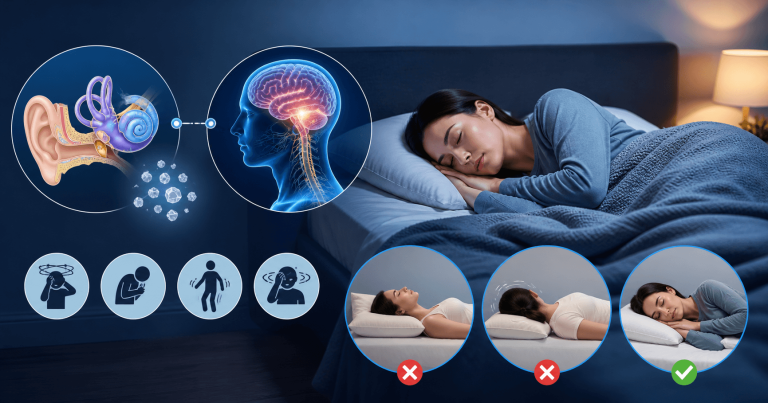
Why Sleep Position Matters In Vertigo
Your sleep posture for vertigo plays a crucial role in managing symptoms. The wrong position can trigger:
- Head movement dizziness
- Morning vertigo symptoms
- Sleep disorders and dizziness
When you lie flat or move suddenly, it can disturb the already sensitive vestibular system. Proper sleep alignment and positioning help stabilize your inner ear and reduce symptom intensity.
Best Sleeping Position For Vertigo Patients
Finding the best sleeping position is one of the simplest yet most effective ways to manage vertigo symptoms.
1. Elevated Head Position
Sleeping with your head slightly raised is highly effective.
- Use 2 pillows or a wedge
- Maintain a 30–45° elevated head position
- Supports proper fluid balance in the inner ear
Ideal for:
- BPPV vertigo
- Night dizziness
This method reduces spinning sensation at night and helps prevent sudden attacks.
2. Side Sleeping (Non-Affected Side)
Sleeping on your side—specifically the non-affected side—can significantly reduce symptoms.
- Minimizes pressure on the affected ear
- Promotes better sleep ergonomics
Benefits:
- Reduces sudden dizziness in bed
- Improves sleep comfort
3. Back Sleeping with Proper Neck Support
For patients with cervical vertigo, sleeping on the back with good support is beneficial.
- Maintain spinal alignment during sleep
- Use a neck support pillow
Helps:
- Reduce neck strain
- Improve blood circulation
4. Pillow Positioning for Vertigo
Choosing the right pillow is often overlooked but essential.
- Maintain proper neck support
- Avoid too high or too flat pillows
- Focus on best pillow height for vertigo
A good pillow ensures better sleep quality improvement and prevents unnecessary head tilt.
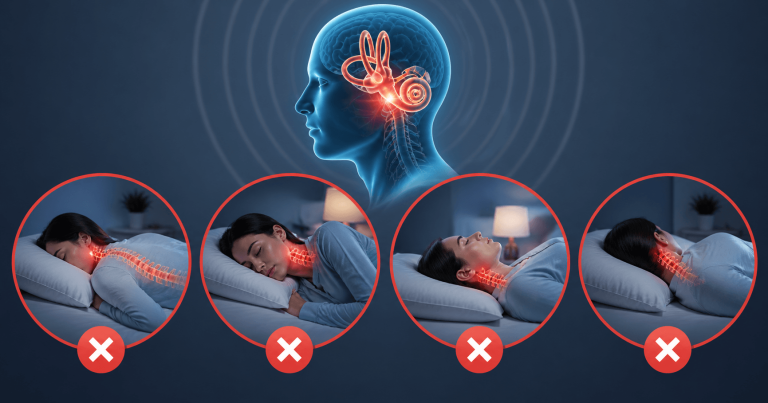
Sleeping Positions to Avoid
Certain positions can worsen symptoms and should be avoided:
- Sleeping completely flat
- Sleeping on the affected side
- Sudden head turns
- Poor sleep alignment
These can trigger:
- Spinning sensation
- Imbalance during sleep
- Increased vertigo symptoms
How Physiotherapy Helps (Step-by-Step)
At Varia Physiotherapy Clinic, we focus on evidence-based physiotherapy for vertigo rather than temporary fixes.
1. Detailed Clinical Assessment
We begin by identifying the root cause:
- Vestibular testing
- Postural analysis
- Movement assessment
2. Canalith Repositioning Techniques
For BPPV, we use methods like the Epley maneuver, which helps reposition displaced crystals.Provides quick relief in many cases
3. Vestibular Rehabilitation Therapy (VRT)
A structured program including:
- Gaze stabilization exercises
- Balance retraining
- Controlled head movements
Improves coordination between the brain and inner ear
4. Postural Correction & Neck Care
We address:
- Poor posture
- Muscle stiffness
Using:
- Posture correction exercises
- Ergonomic advice
5. Home Care & Lifestyle Guidance
Patients are guided on:
- Sleep hygiene for vertigo
- Hydration and dizziness
- Stress management
According to the National Institutes of Health, vestibular rehabilitation significantly improves symptoms in most patients when done consistently.
Real Patient Scenario From Our Clinic
A 38-year-old IT professional from Ahmedabad visited us with:
- Dizziness while lying down
- Vertigo when turning head
- Anxiety due to poor sleep
Diagnosis:
BPPV (Benign Paroxysmal Positional Vertigo) is one of the most common causes of vertigo, where tiny inner ear crystals become displaced and interfere with balance signals. This leads to brief episodes of spinning sensation, especially during head movements like turning in bed or looking up. With accurate diagnosis and treatments such as canalith repositioning maneuvers, most patients experience quick and effective relief.
Treatment Plan:
- 2 sessions of canalith repositioning
- 2 weeks of vestibular therapy exercises
- Guidance on safe sleeping habits
Outcome:
Within 2 weeks:
- Symptoms reduced by 70–80%
- Sleep improved significantly
- Patient returned to normal routine
This reflects realistic recovery—consistent effort leads to lasting results.
Myths vs Facts
Myth: Vertigo will go away on its own
Fact: Many cases need vestibular rehabilitation
Myth: Only medication works
Fact: Physiotherapy for vertigo is highly effective
Myth: Avoid movement completely
Fact: Controlled exercises improve recovery
Lifestyle & Home Care Tips
Supporting your recovery at home is equally important:
- Maintain a vertigo-friendly lifestyle
- Follow a consistent daily routine for vertigo patients
- Practice relaxation techniques
- Stay hydrated
- Avoid sudden head movements
These habits contribute to long-term vertigo management and better outcomes.
When to See a Physiotherapist
Consult a specialist if you experience:
- Frequent spinning sensation
- Persistent dizziness treatment needs
- Difficulty maintaining balance
- Symptoms lasting more than a week
When to Seek Medical Referral
- Severe headaches
- Vision problems
- Speech difficulty
These may require evaluation by a neurologist or ENT specialist.
Conclusion
The Best Sleeping Position For Vertigo Patients (Doctor Guide) is not just about comfort—it’s a key part of recovery. With the right sleep posture, expert-guided physiotherapy, and consistent lifestyle changes, most patients can achieve significant vertigo relief.
If you’re struggling with vertigo, remember that effective, evidence-based care is available. Early intervention and proper guidance can make a big difference in your recovery journey.
Ethical Call-to-Action
If you’re unsure whether your symptoms need attention, it’s okay to start with a simple consultation. Understanding your condition is the first step toward recovery—no pressure, just guidance.
If you’d like to speak with a physiotherapist or book an assessment at Varia Physiotherapy Clinic, you can reach out here:
 Call: +91 95123 79555
 Email: hello.drhetalvaria@gmail.com
 Website: www.variaphysiotherapyclinic.com
Our team is here to listen, assess, and guide you toward safe and effective recovery.
Best Sleeping Position For Vertigo Patients - FAQs
Use an elevated pillow and avoid sudden head movements.
Side sleeping or elevated back sleeping is most effective.
Yes, proper pillow support for the neck improves alignment and reduces symptoms.
Follow sleep hygiene, hydration, and physiotherapy exercises.
Most cases improve with proper treatment and vestibular rehabilitation.
About the Author

Dr. Hetal M Varia
After a rich experience of working in US healthcare as manager and licensed physiotherapist in US for last 11 years, she has returned home with a vision to become pioneer of Vestibular Therapy and specialized Parkinson physiotherapy in Ahmedabad. With her special skills and expertise in vertigo, Parkinson, balance and movement disorders therapy, Dr. Varia is committed to provide US standards of therapy services , compassionate and patient centered care to our people and community. With a vision of the world where everyone walks strong & steady, she intends to empower individuals with vestibular and neurological disorders through specialized care, rehabilitation & innovative therapies to improve mobility, balance & overall quality of life!