
Advanced Hemiplegia Physiotherapy In Ahmedabad | Improve Mobility Today
If you or a loved one is living with hemiplegia, even simple tasks—walking, holding a cup, getting dressed—can suddenly feel overwhelming. Many patients who visit Varia Physiotherapy Clinic in Ahmedabad share a similar concern: “Will I ever get back to normal?”
The truth is, recovery after hemiplegia is a journey. It requires patience, the right guidance, and a structured rehabilitation plan. With Advanced Hemiplegia Physiotherapy In Ahmedabad | Improve Mobility Today, the goal isn’t just movement—it’s helping you regain independence, confidence, and quality of life.
At Varia Physiotherapy Clinic, we work closely with patients aged 30–65 dealing with neurological or musculoskeletal challenges. Our approach is rooted in clinical expertise, real-world experience, and compassionate care—because every patient’s recovery story is unique.

Understanding Hemiplegia In Simple Terms
Hemiplegia refers to paralysis or significant weakness on one side of the body. It most commonly occurs after a stroke, but can also result from brain injuries, tumors, or neurological conditions.
Common Causes
- Stroke (most common cause)
- Traumatic brain injury
- Brain infections
- Tumors affecting motor areas
- Neurological disorders
When the brain’s motor control center is damaged, it disrupts signals sent to muscles. This leads to:
- Weakness or paralysis on one side
- Poor coordination
- Difficulty in walking or balancing
- Muscle stiffness (spasticity)
According to research by the World Health Organization on neurological rehabilitation, early intervention plays a critical role in improving functional outcomes and reducing long-term disability.
Read More: Expert Neuro Physiotherapist In Ahmedabad
How Hemiplegia Affects Daily Life
Patients often tell us it’s not just the physical limitation—it’s the emotional toll.
You may experience:
- Difficulty standing or walking independently
- Trouble using one hand for daily activities
- Loss of balance leading to fear of falling
- Fatigue during simple movements
At Varia Physiotherapy Clinic, we understand these challenges deeply because we see them every day. And more importantly—we help patients overcome them step by step.
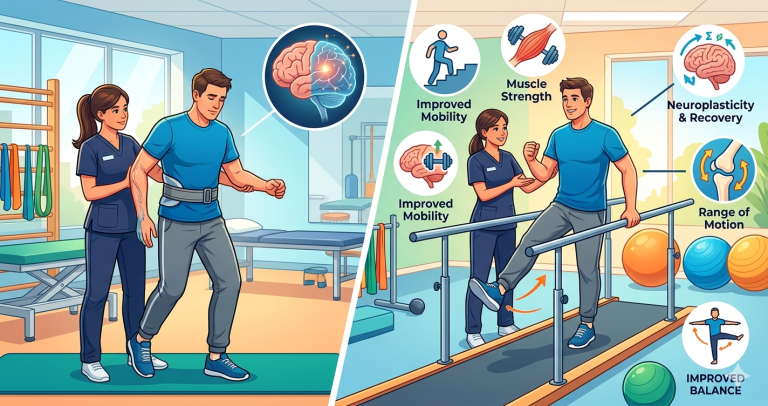
How Physiotherapy Helps In Hemiplegia Recovery
At Varia Physiotherapy Clinic, our Advanced Hemiplegia Physiotherapy In Ahmedabad approach focuses on restoring real-life function, not just isolated muscle strength.
Step-by-Step Approach We Follow
1. Detailed Clinical Assessment
Every treatment begins with a thorough evaluation:
- Muscle strength testing
- Range of motion analysis
- Balance and gait assessment
- Functional ability evaluation
This helps us design a personalized rehabilitation plan.
2. Early Mobilization
Early movement prevents complications like stiffness and muscle shortening.
We focus on:
- Bed mobility exercises
- Assisted sitting and standing
- Weight-bearing activities
3. Neuroplasticity-Based Training
The brain has the ability to rewire itself—this is called neuroplasticity.
We use:
- Repetitive task training
- Functional movement practice
- Bilateral coordination exercises
4. Strength and Balance Training
Weak muscles are gradually strengthened through:
- Resistance exercises
- Core stability training
- Balance re-education
5. Gait Training (Walking Recovery)
Walking again is a major milestone.
We use:
- Parallel bars
- Assisted walking techniques
- Step training and posture correction
6. Spasticity Management
Muscle stiffness is common in hemiplegia.
We manage it through:
- Stretching techniques
- Positioning strategies
- Neuromuscular facilitation
7. Functional Independence Training
The ultimate goal is independence.
We train patients in:
- Dressing
- Eating
- Personal hygiene
- Daily activities
Real Patient Experience (From Varia Physiotherapy Clinic)
A 52-year-old male patient came to us after a stroke. He had severe weakness on his right side and required full assistance to walk.
Initial Challenges:
Could Not Stand Independently
Many patients feel frustrated when they cannot stand without support after hemiplegia. This usually happens due to muscle weakness, poor coordination, and reduced postural control. With guided physiotherapy and gradual strengthening through neuro physiotherapy treatment in Ahmedabad, patients can safely relearn how to bear weight and regain stability.
Poor Balance
Balance issues are common because the brain’s ability to control body movements is affected. Patients may feel unsteady even while sitting or standing, increasing the risk of falls. Targeted balance training helps improve coordination and confidence over time.
Fear of Falling
After experiencing weakness or instability, it’s natural to develop a fear of falling. This fear can limit movement and slow down recovery if not addressed. Physiotherapy focuses not only on physical strength but also on rebuilding confidence through safe, supervised practice.
Treatment Approach:
Early Mobilization Exercises
After hemiplegia, starting gentle movement as early as possible helps prevent stiffness and muscle tightness. These exercises are carefully guided to ensure safety while encouraging the body to regain basic movement patterns. Early mobilization also supports better circulation and reduces the risk of complications.
Progressive Gait Training
Walking again can feel challenging, but structured gait training helps patients rebuild this ability step by step. It begins with supported walking and gradually progresses as strength and balance improve. This approach ensures safe recovery while restoring confidence in everyday mobility.
Functional Task Practice
Recovery is not just about exercises—it’s about real-life independence. Through targeted rehabilitation, patients can gradually improve mobility with hemiplegia physiotherapy and return to daily activities with more confidence.
Progress Over 12 Weeks:
Able to Stand with Minimal Support
After consistent physiotherapy, many patients gradually regain the strength and balance needed to stand with only slight assistance. This milestone reflects improved muscle control and postural stability. It is often one of the first encouraging signs of functional recovery.
Started Walking Short Distances with Assistance
With guided gait training, patients begin taking small, supported steps using aids or therapist assistance. This phase focuses on safe movement, proper posture, and coordination. Even short-distance walking marks meaningful progress toward independence.
Improved Confidence Significantly
As physical abilities improve, patients often feel more confident in their movements and daily activities. This emotional progress is just as important as physical recovery. Feeling secure while moving helps patients stay motivated and actively participate in rehabilitation.
This is not an overnight transformation. It’s a gradual, consistent process—and that’s what makes physiotherapy effective.
Evidence-Based Care You Can Trust
Our treatment methods align with globally recognized rehabilitation principles. Research from reputable institutions highlights:
Early Physiotherapy Improves Recovery Outcomes
Starting physiotherapy soon after the condition helps the body and brain begin the healing process earlier. It reduces complications like stiffness and muscle loss while promoting better functional recovery. Early intervention often leads to more meaningful and faster improvements in mobility.
Task-Specific Training Enhances Functional Ability
Practicing real-life movements—such as standing, walking, or using the hand—helps the brain relearn essential skills more effectively. This targeted approach improves coordination and makes daily activities easier to perform. It focuses on what truly matters for independent living
Consistency is Key to Neurological Improvement
Recovery in neurological conditions requires regular and repeated practice over time. Consistent physiotherapy helps strengthen neural pathways and supports gradual progress. Even small, steady improvements can lead to significant functional gains in the long term.
We follow structured protocols inspired by international rehabilitation guidelines to ensure safe and effective care.
Common Myths vs Facts About Hemiplegia
Myth 1: Recovery is not possible after a few months
Fact: Recovery can continue for months or even years with consistent therapy.
Myth 2: Rest is better than movement
Fact: Controlled movement is essential for recovery and prevents complications.
Myth 3: Physiotherapy is only for early stages
Fact: Even chronic patients benefit from structured rehabilitation.
Myth 4: Walking recovery is impossible
Fact: Many patients regain walking ability with proper training and support.
When Should You See a Physiotherapist?
You should seek physiotherapy if you notice:
- Weakness on one side of the body
- Difficulty walking or balancing
- Reduced coordination
- Muscle stiffness
- Trouble performing daily tasks
Early intervention leads to better outcomes.
When Referral to a Specialist is Necessary
While physiotherapy plays a key role, some situations require medical consultation:
- Sudden worsening of symptoms
- Severe pain or swelling
- Suspected new neurological event
- Lack of progress despite therapy
In such cases, referral to a neurologist or orthopedic specialist ensures comprehensive care.
Conclusion
Living with hemiplegia can feel challenging, but recovery is possible with the right approach, guidance, and consistency. With Advanced Hemiplegia Physiotherapy In Ahmedabad | Improve Mobility Today, the focus is not just on movement—but on helping you reclaim independence and confidence in your daily life.
At Varia Physiotherapy Clinic, we combine clinical expertise, personalized care, and evidence-based techniques to support your recovery journey—every step of the way.
If you or a loved one is struggling with hemiplegia, seeking timely physiotherapy can make a meaningful difference. Start your recovery journey with a trusted team that understands your needs and works with you toward real, achievable progress.
Ethical Call-to-Action
If you’re unsure whether your symptoms need attention, it’s okay to start with a simple consultation. Understanding your condition is the first step toward recovery—no pressure, just guidance.
If you’d like to speak with a physiotherapist or book an assessment at Varia Physiotherapy Clinic, you can reach out here:
 Call: +91 95123 79555
 Email: hello.drhetalvaria@gmail.com
 Website: www.variaphysiotherapyclinic.com
Our team is here to listen, assess, and guide you toward safe and effective recovery.
Hemiplegia Physiotherapy In Ahmedabad - FAQs
1. How long does hemiplegia recovery take?
2. Can physiotherapy completely cure hemiplegia?
3. Is Advanced Hemiplegia Physiotherapy In Ahmedabad effective for chronic patients?
4. How often should therapy sessions be done?
5. Can elderly patients benefit from physiotherapy?
About the Author

Dr. Hetal M Varia
After a rich experience of working in US healthcare as manager and licensed physiotherapist in US for last 11 years, she has returned home with a vision to become pioneer of Vestibular Therapy and specialized Parkinson physiotherapy in Ahmedabad. With her special skills and expertise in vertigo, Parkinson, balance and movement disorders therapy, Dr. Varia is committed to provide US standards of therapy services , compassionate and patient centered care to our people and community. With a vision of the world where everyone walks strong & steady, she intends to empower individuals with vestibular and neurological disorders through specialized care, rehabilitation & innovative therapies to improve mobility, balance & overall quality of life!